
Product description
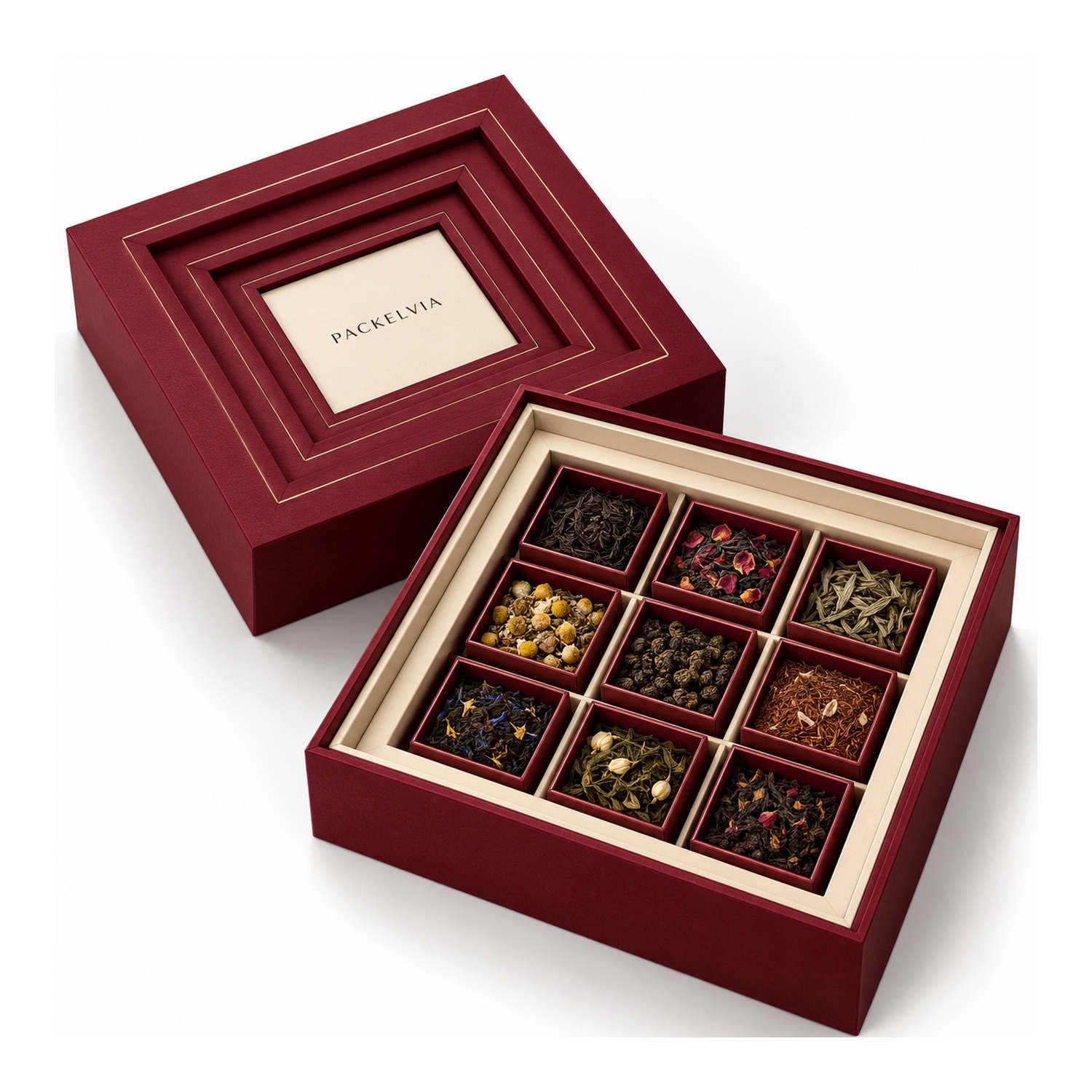
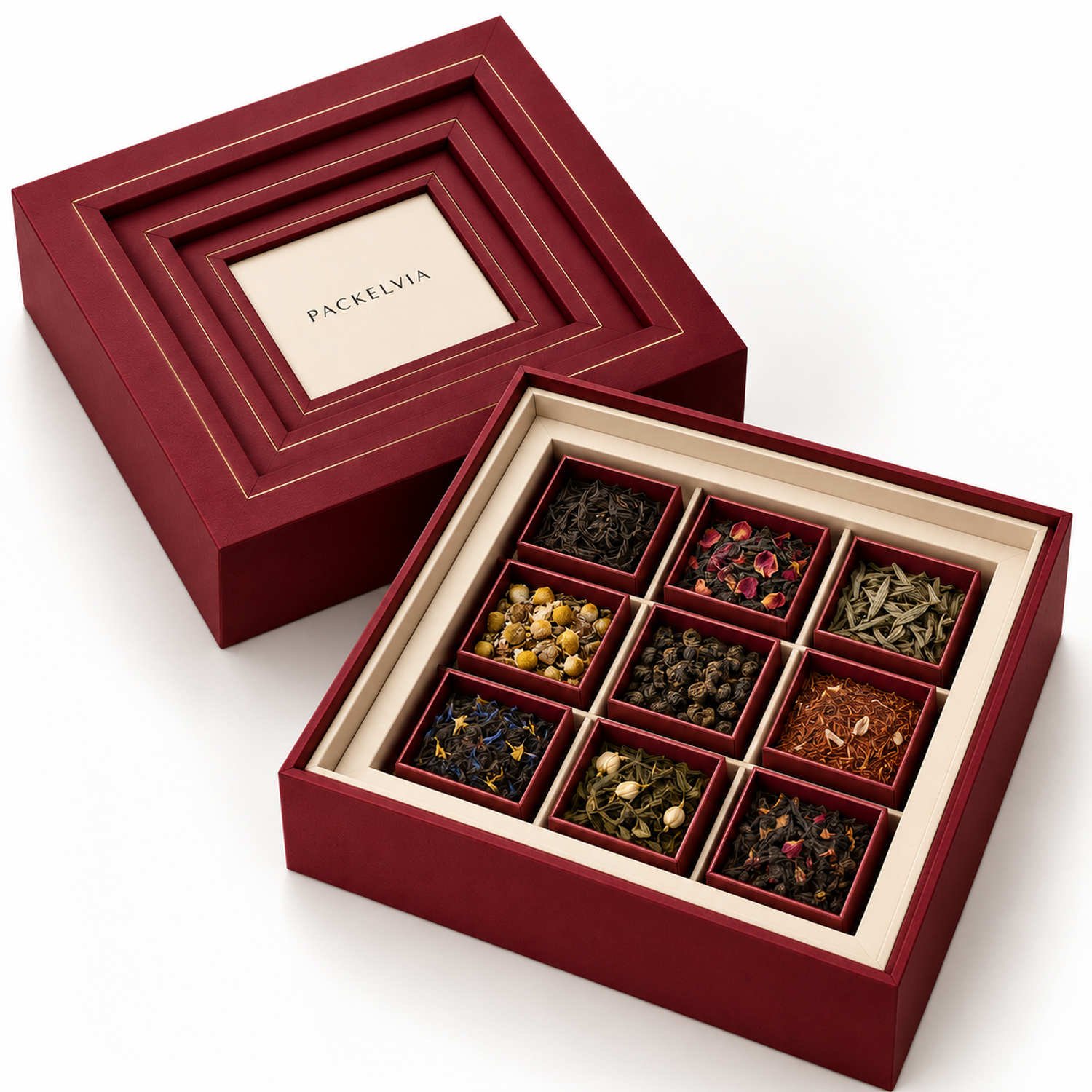
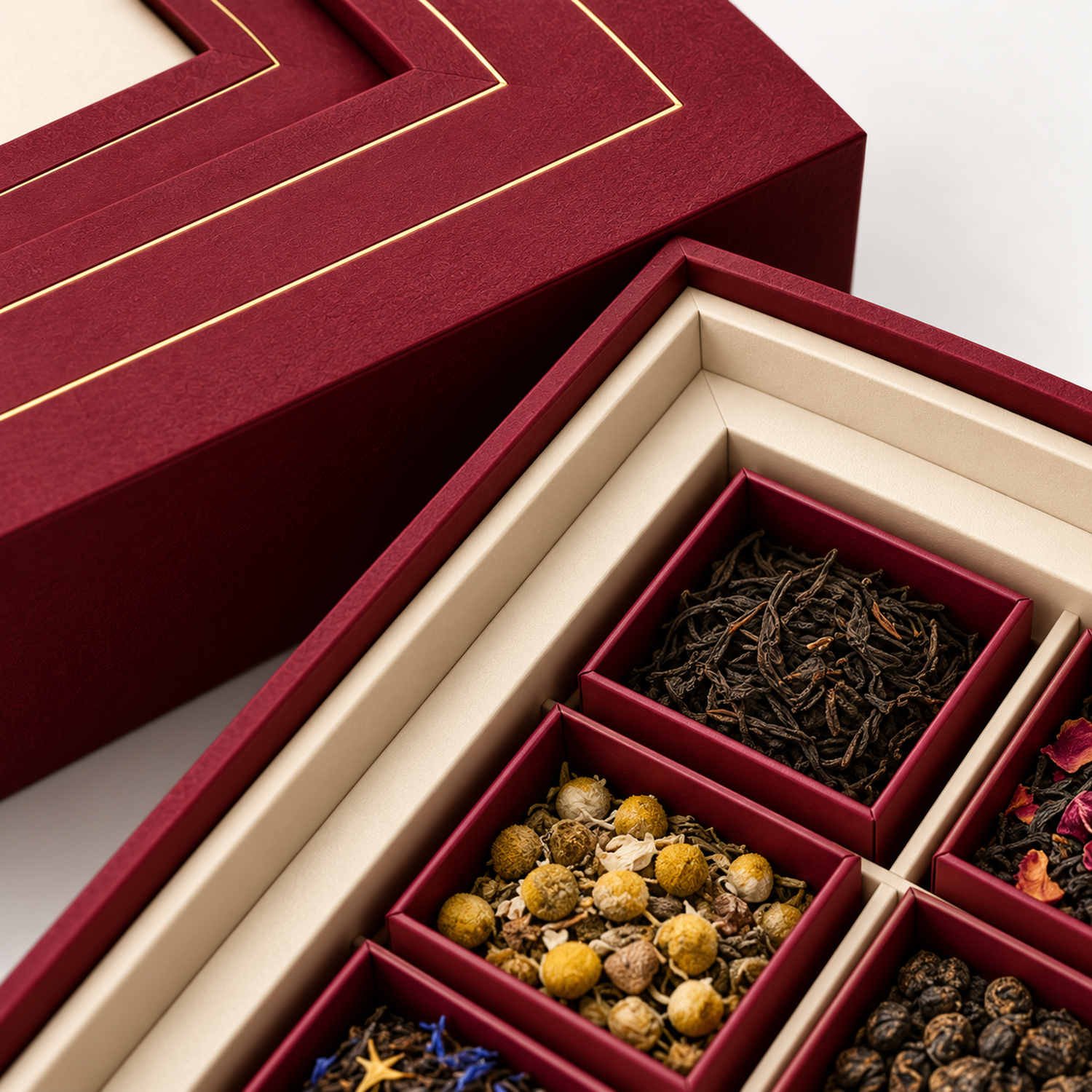
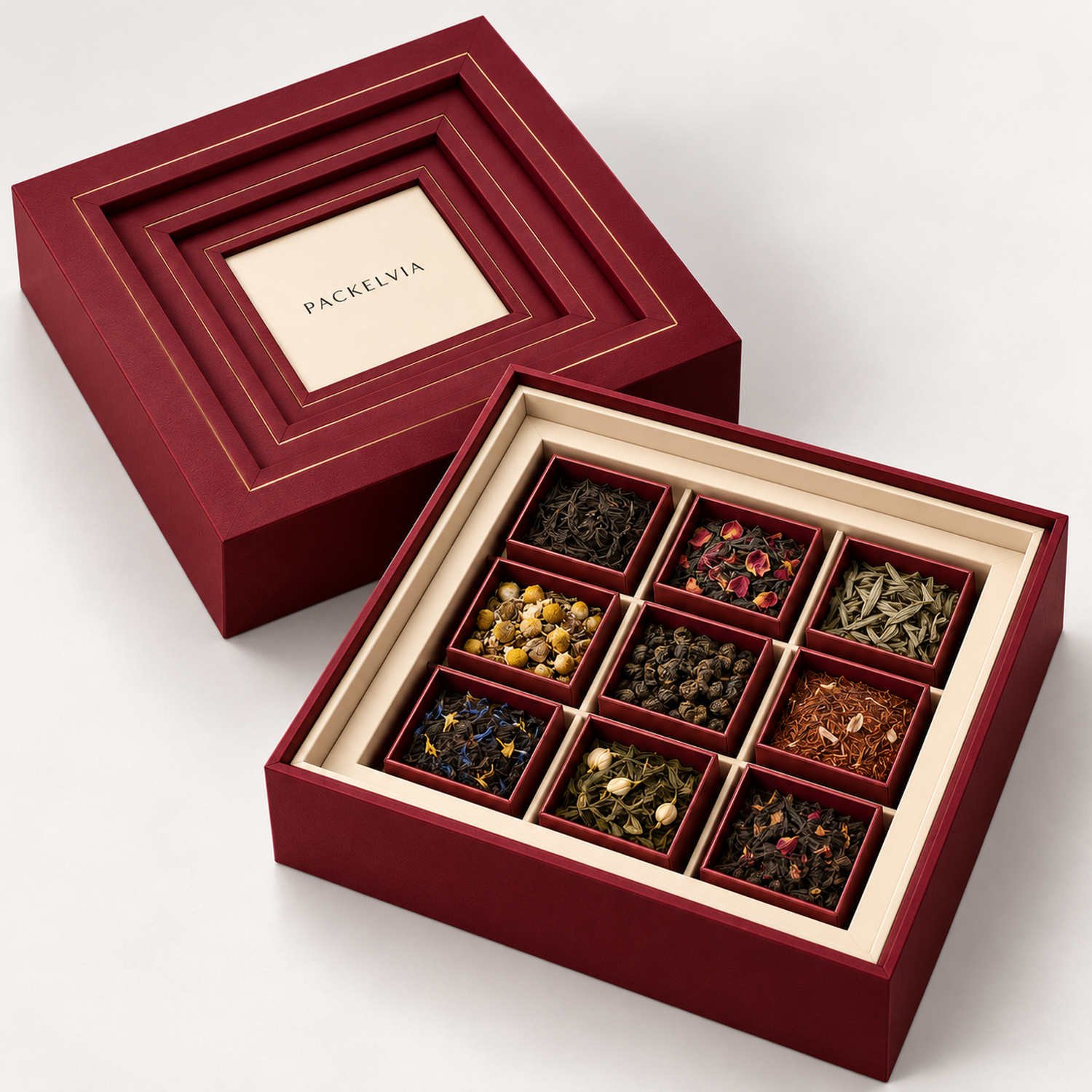
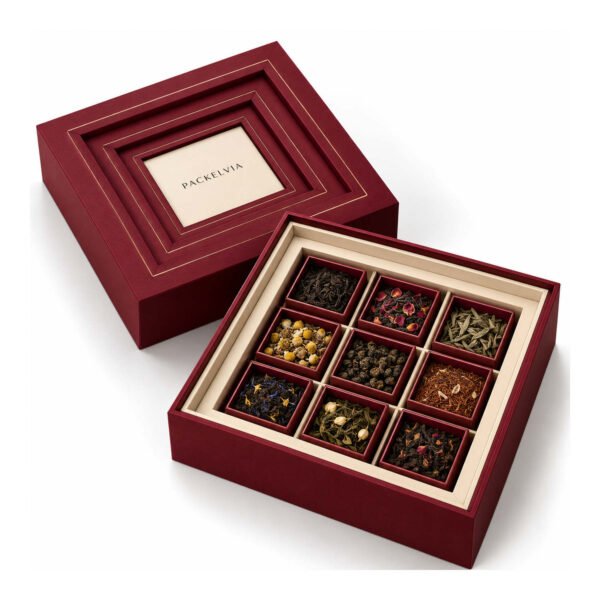
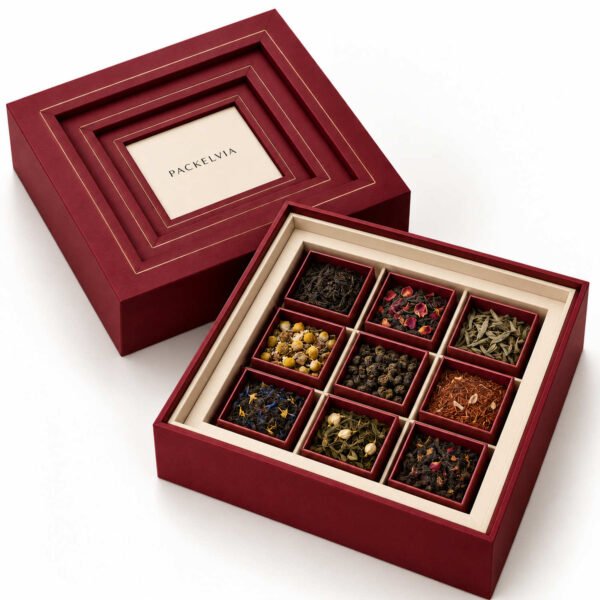
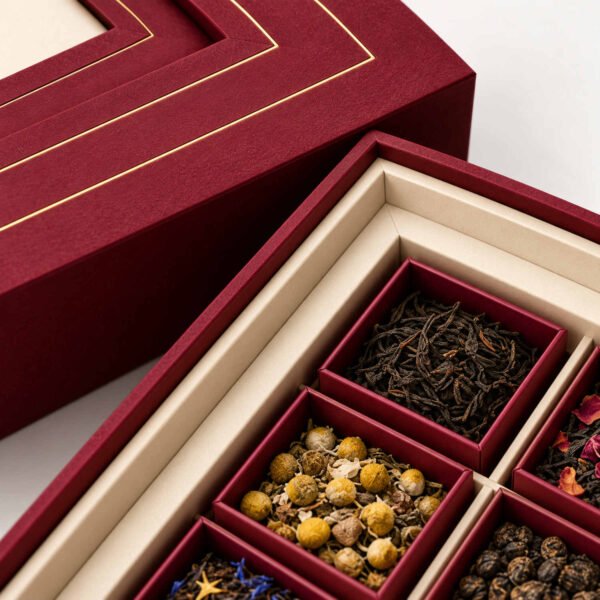
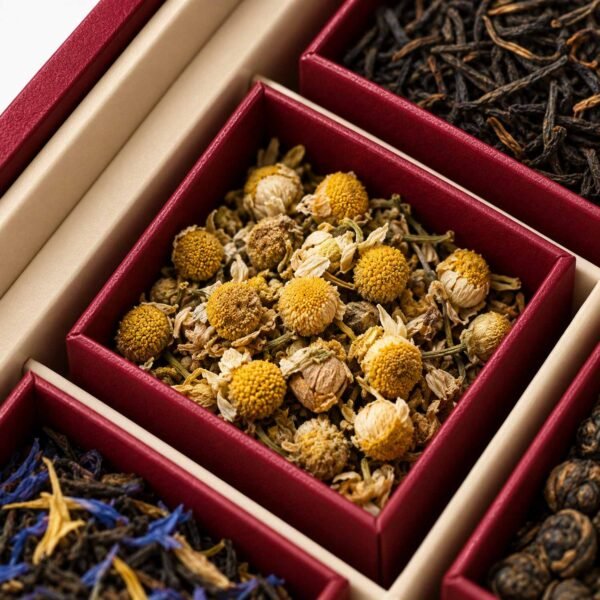
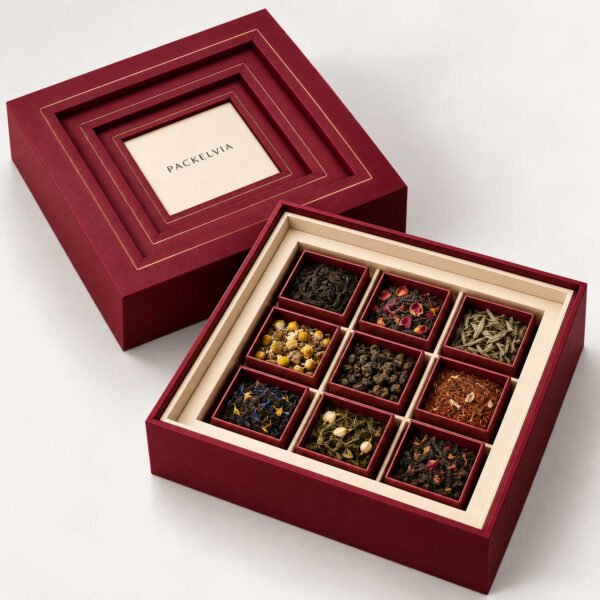
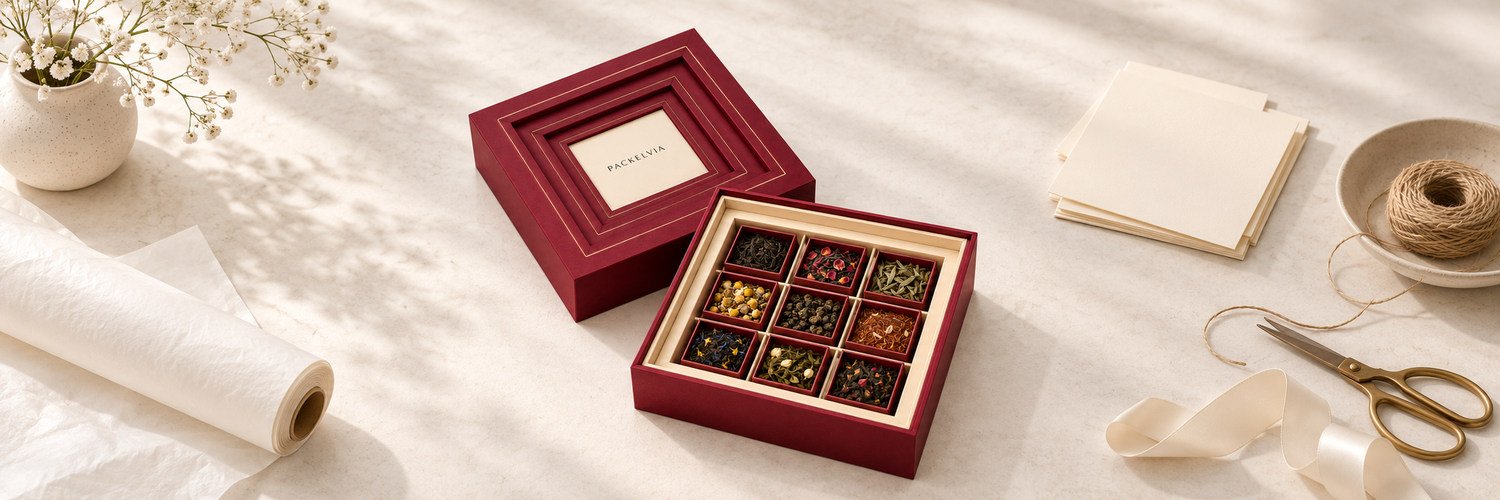
This nine compartment tea box is a square sampler format. The base is burgundy outside and cream-lined inside, with nine cells arranged in a three-by-three grid. Burgundy walls give each selection its own small square opening.
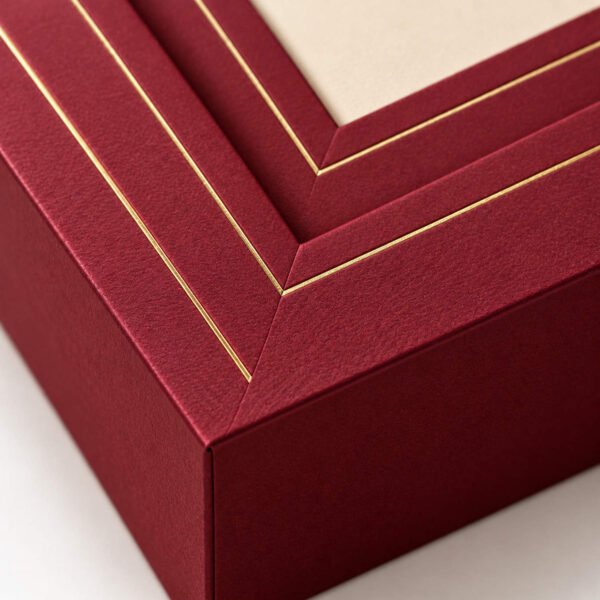
The lid is separate and sits over the base. Its top has a series of stepped frames that narrow towards a flat cream panel at the centre, providing a position for a label or printed mark.
It is built for nine-selection samplers and boutique tea gifts, where the point is comparison: nine teas presented side by side and read as a grid at a glance. Loose tea shown in the reference images is illustrative only; see Filling the cells below before specifying how the box will be filled.
What you receive
One base with the nine-compartment layout fitted in place, and one detached lid with the stepped frame presentation already assembled.
The box arrives empty. Tea, pouches, liners and labels are not included unless separately listed in the agreed supply scope. The cream centre panel provides a surface for your label or printing; any supplied artwork is agreed separately.
Boxes are packed with the lid on and protective separation as specified in the packing plan. Shaped fitments and layer boards are reviewed so the lid details are not compressed in transit.
Construction and materials
Three parts: the base, the nine-cell grid, and the lid.
The base is a rigid square tray with a burgundy exterior and cream lining. The internal compartment structure divides the opening into nine cells. The separate lid carries stepped square frame details around a central cream panel.
Board, paper, compartment construction and the way the lid steps are formed are confirmed on the approved sample. The images do not establish whether the cells are individual trays or a shared lattice, how the lid is laminated or assembled, or any tested performance.
Nine compartments and their walls
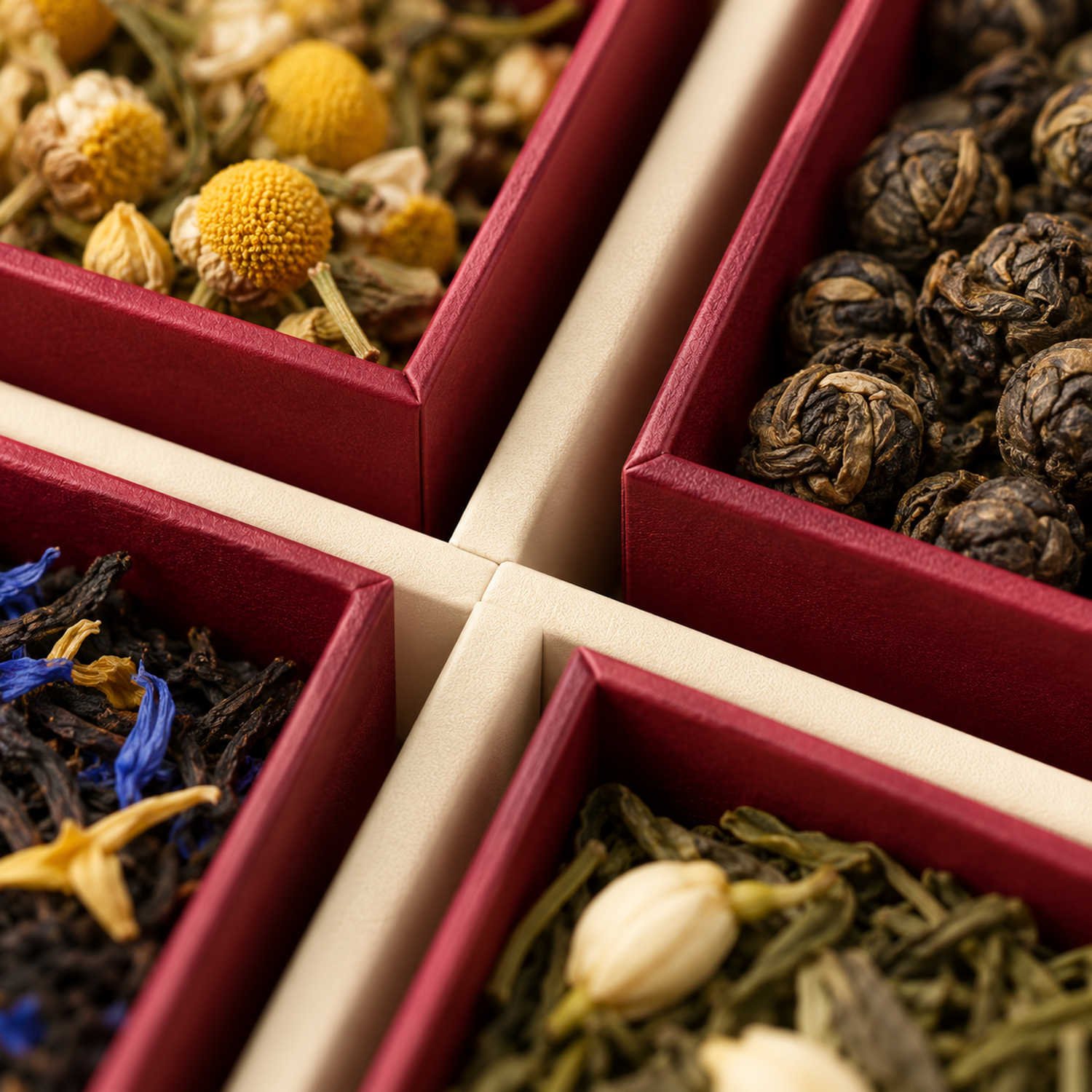
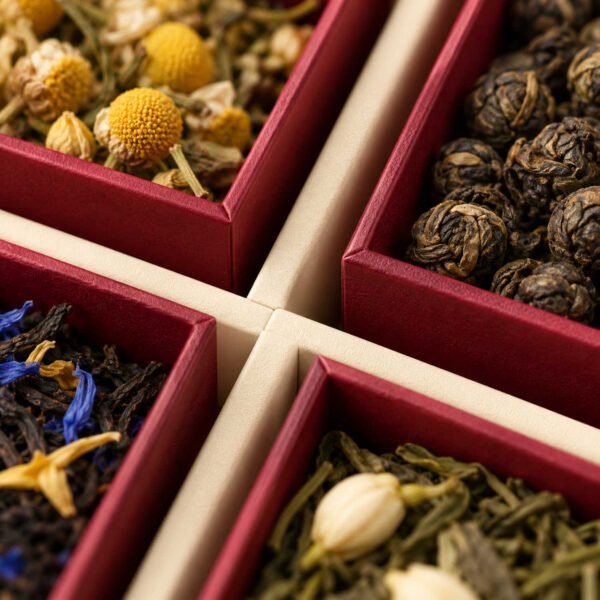
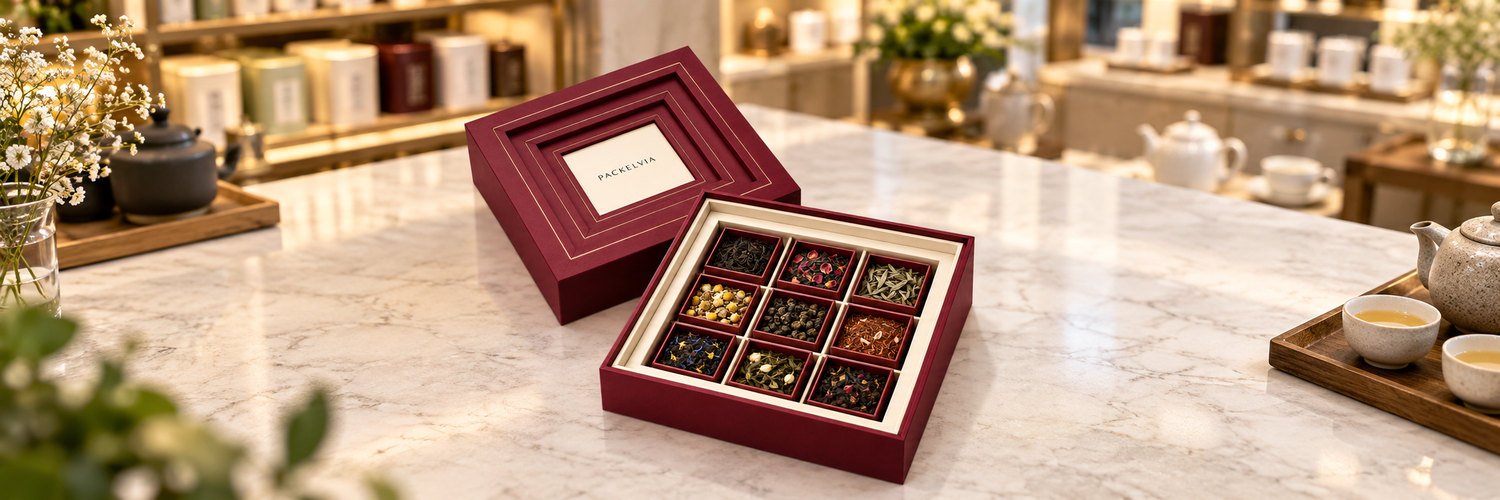
The three-by-three layout is assessed as a complete grid. Cell openings, wall thickness, crossing details and the height of the top edges all affect how evenly the nine selections are presented.
Individual cell trays and a shared divider lattice are different construction options. Wrapping each wall does not by itself determine which method is used or whether walls are doubled. The method is selected for the portion packaging, materials and intended handling.
Small dimensional differences can accumulate across the grid, so the sample is checked for consistent cell sizes, straight divisions and aligned openings rather than judged one cell at a time.
Cell size, wall thickness and the crossing method are set with your portion size and confirmed on the sample.
The stepped lid
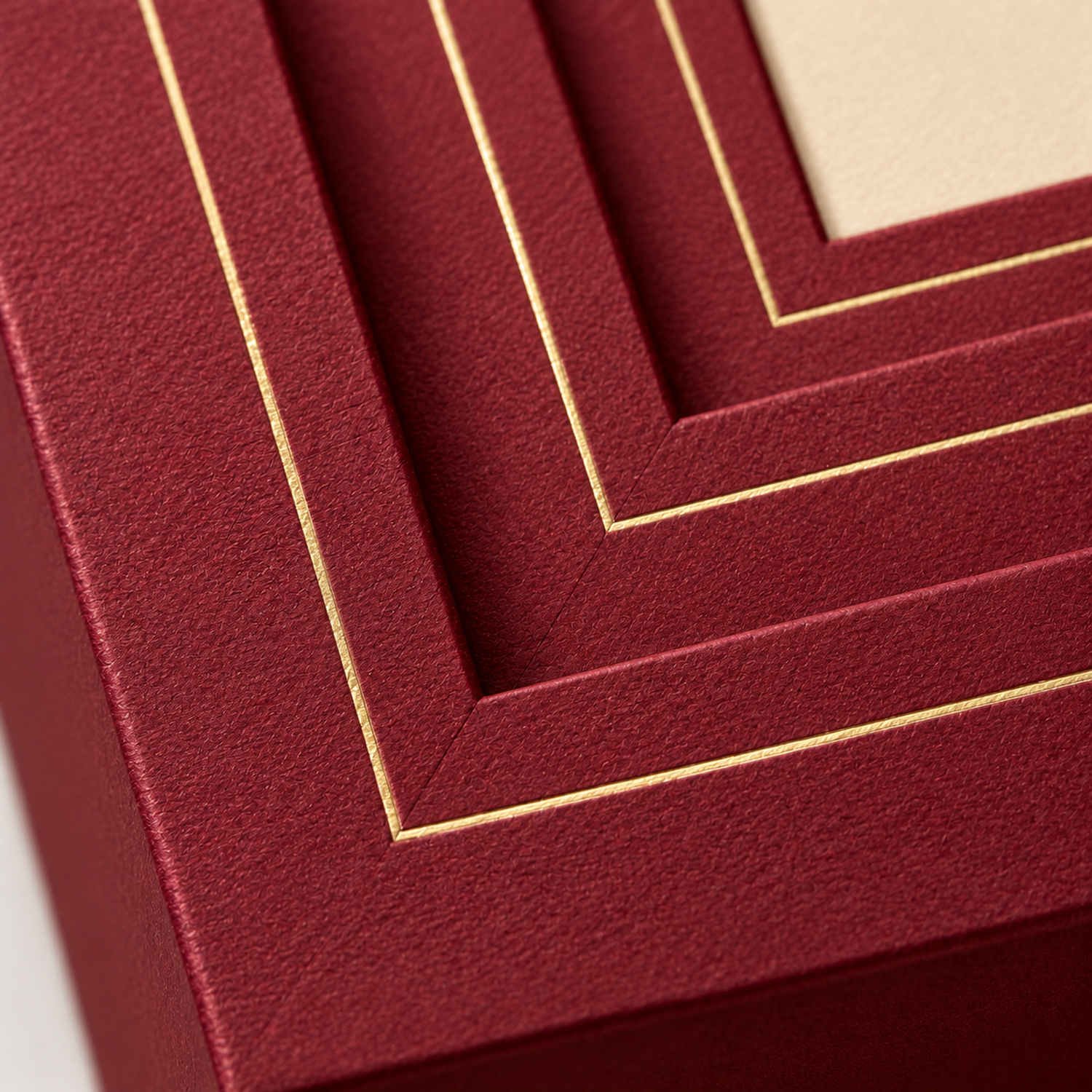
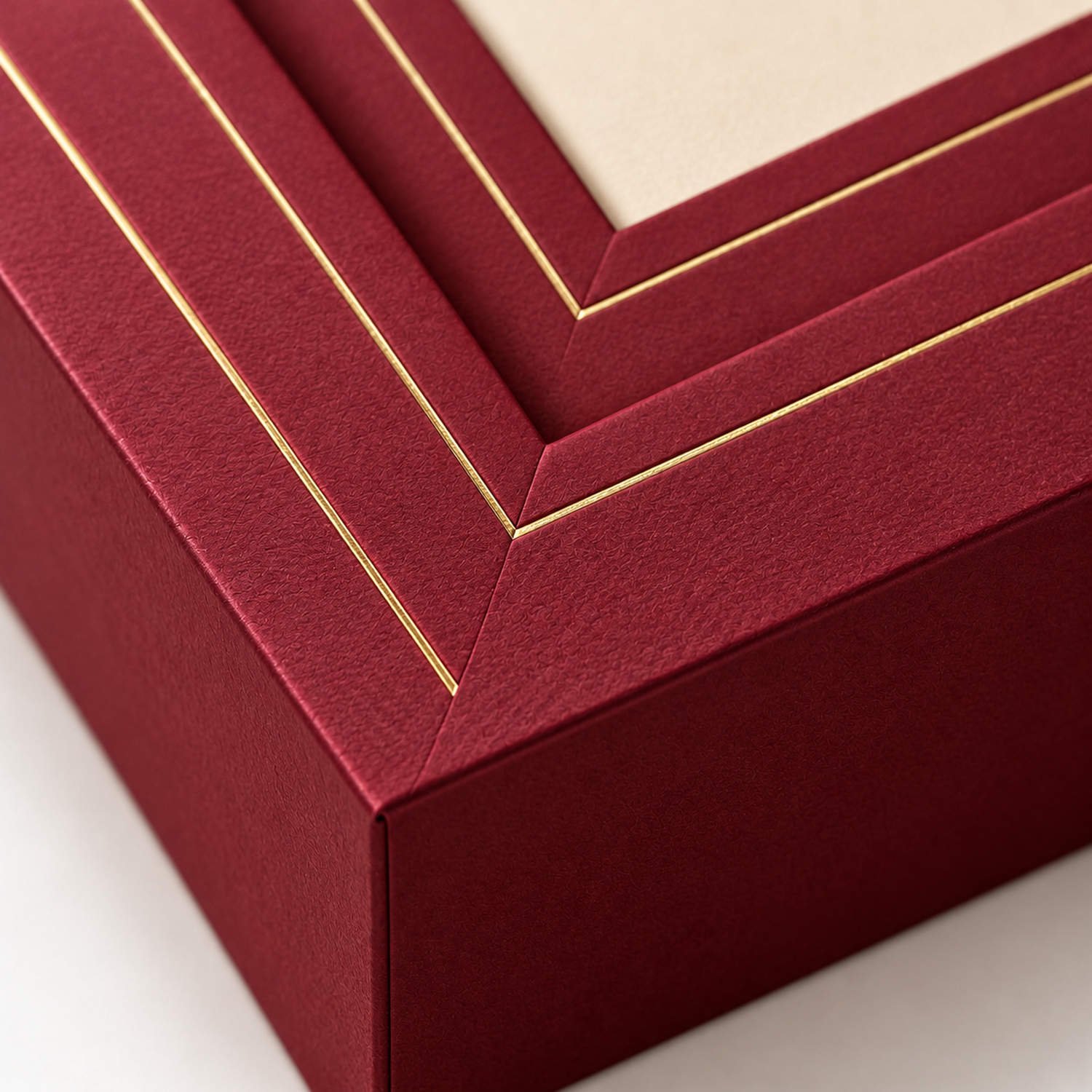
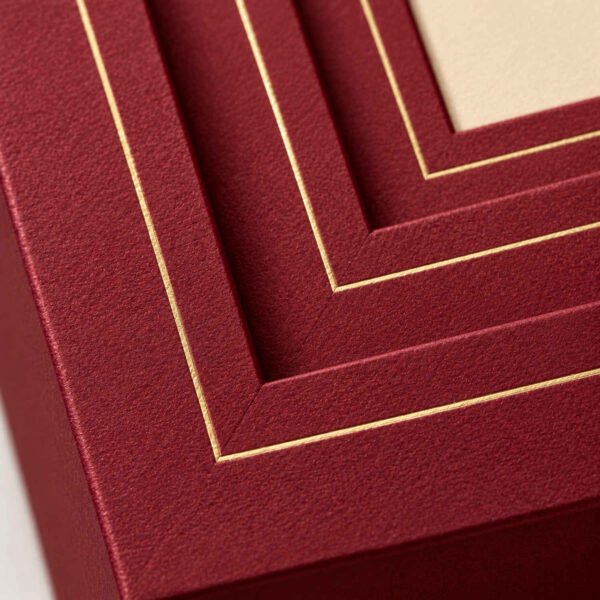
The stepped frames give the lid its layered appearance and lead the eye towards the cream centre panel. Step depth, frame widths and the method used to create the relief are confirmed on the sample rather than inferred from the image.
Check that the frames are centred and that the visible margins are consistent on all four sides. The centre panel should be flat enough for the agreed label or printing, without ripples or unsupported edges.
A square outline can allow several closing orientations, but actual fit depends on the final construction. Specify the intended top and bottom of directional artwork, and check orientation with the assembled sample.
Filling the cells
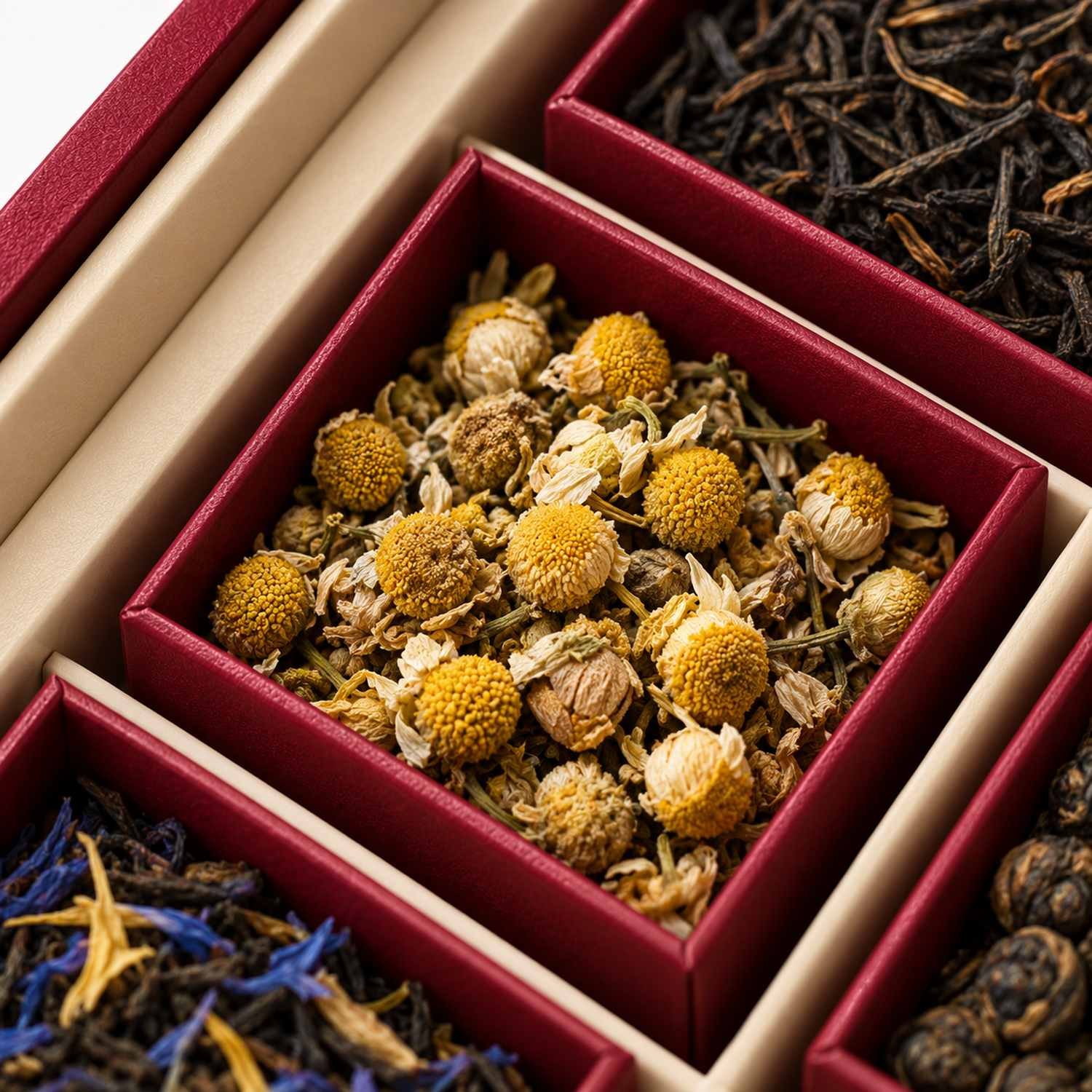
The reference images show loose tea for visual presentation. They do not establish that the paper, inks, adhesives or lining are suitable for direct contact with tea, and no food-contact approval is claimed for this design.
One option is to keep tea in suitable sealed pouches or tins and place those packs in the cells. Another is to specify a suitable liner or cup as part of a separately reviewed contact system. A liner or cup is not automatically a freshness barrier.
If direct filling is required, the complete contact system needs to be specified and assessed for the tea, storage conditions and destination market before use. Supporting material information and any applicable testing are reviewed separately.
Choose the filling route before the cell dimensions are fixed: pouches, tins and liner cups each need their own space and clearance.
Colours and finishes
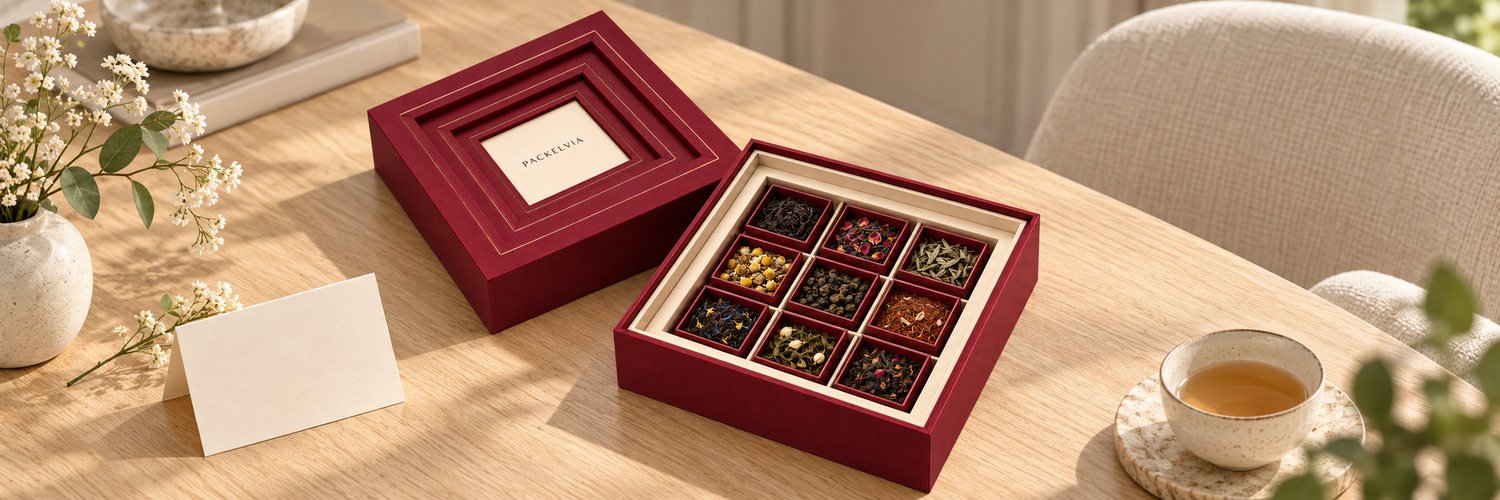
Reference colours are burgundy for the base, cell walls and lid frames, with cream lining and a cream centre panel. Base, grid and lid are specified separately, so the presentation can follow the reference contrast, use cream compartments with a burgundy lid, or carry the contrast mainly through the label.
Finishes include plain wrap, printed artwork and foil lines. Review the compartment mouths and wrapped edges on the sample for clean finishing, consistent colour and suitable access to the portion packs.
Personalisation
Printing can be placed on the lid frames, outer walls and centre panel. The flat cream centre is a clear position for a small brand mark or label. Frame artwork is developed within the available step width and checked against the assembled relief.
A design spanning several steps may be interrupted by their edges. Small repeated marks or restrained borders can be reviewed where the chosen process and material allow them.
Printing inside a cell needs additional consideration where food could contact that surface. Keep branding on external surfaces or the lid panel unless the complete intended contact system has been reviewed.
Preparing Illustrator artwork? See Adobe’s guide to packaging artwork files before sending linked assets and fonts.
Care and reuse
The box is paper-based: keep it dry and wipe with a dry or barely damp cloth. Avoid stacking heavy objects on the stepped lid. Its internal support and load capacity are not established by the reference image.
Store it closed and empty, with the lid seated evenly on the base. After the tea packs are removed, the grid can be reused as a nine-part organiser for small, light objects that fit the cells.
Dimensions and specifications
| Reference | PK-TC-10 |
|---|---|
| Type | Nine-compartment tea sampler box, stepped lid |
| Structure | Square burgundy base, cream lining, nine-cell burgundy compartments, detached stepped-frame lid |
| Grid | Three by three; cell size, wall thickness and construction to be confirmed |
| Cell mouths | Grid evenness, cell openings and wall height checked together on sample |
| Lid | Detached, stepped frame appearance; relief construction and alignment confirmed on sample |
| Label area | Flat cream panel at the lid centre; artwork or label supplied only as agreed |
| Lid orientation | Square outline; closing orientations and directional artwork checked on sample |
| Food contact | No approval claimed; filling route and any direct-contact or barrier system reviewed separately |
| Dimensions | Made to your portions — width, depth, cell size and lid step depth to be confirmed |
| Board and paper | Confirmed on the sample |
| Colour options | Base, grid and lid specified separately |
| Finishing | Plain wrap, printed artwork, foil lines |
| Minimum order | 500 boxes for custom production; smaller quantities to be confirmed |
| Packing | Lid on; fitments, layer boards and clearance as agreed in the packing plan |
| Contents | Box and lid only; tea shown is illustrative and supplied separately |
Delivery and lead time
Start with a sample, and decide the filling route before it is made. Pouches, tins and liner cups change the cell space and clearance; a portion weight alone does not determine the required compartment size.
Send the portion pack dimensions or proposed filling arrangement, number of selections, quantity and required arrival date. The sample is made to that specification; production follows approval, with artwork and packing method signed off at the same time. Lead time depends on the dies, compartment finishing and lid construction, and is confirmed per order once the specification and date are known.
Frequently asked questions
Is the tea included?
No. This is an empty box. Loose tea in the images is a visual reference; tea is supplied separately.
Can loose tea go straight into the cells?
Direct filling is not established by this design. Tea can remain in suitable sealed pouches or tins, or a suitable contact system can be specified and reviewed separately. A liner or cup alone does not automatically establish food-contact suitability or freshness protection.
How even does the grid have to be?
All nine openings are visible together, so cell size, wall alignment and edge height are checked as a whole on the sample against the agreed specification.
Can the lid be printed on the steps?
Yes, subject to step width, material and printing method. Small repeated marks or borders can be reviewed; artwork crossing several steps needs to be checked for interruptions and alignment.
Does the lid only fit one way?
The square outline may allow more than one orientation, but the final fit must be checked. Specify any directional label or artwork and agree whether locating features are needed.
Is the step depth real or printed?
The reference shows a stepped frame design. The physical relief, step depth and manufacturing method are confirmed in the structural specification and sample; the image alone does not prove a particular stacked-ring construction.
Compare the envelope tea gift box for two tins and a scoop, or explore our tea and coffee packaging collection.
Review materials, printing and finishes, or send your portion dimensions and sample requirements.
Images are AI-generated packaging design visualizations, not photographs of a verified production sample. Tea is illustrative. Final materials, construction, intended contact system and fit require specification review and sample approval.


