

Product description
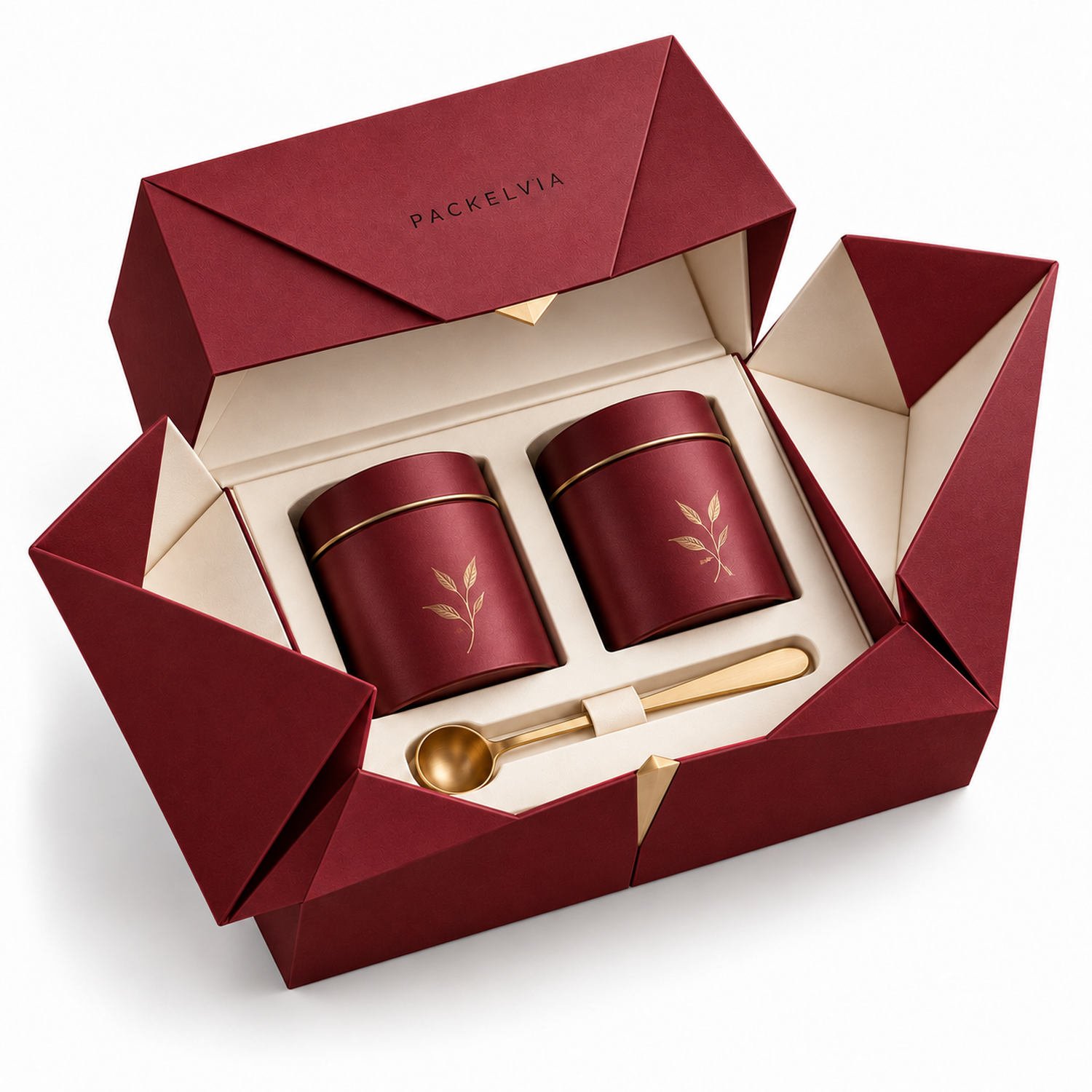
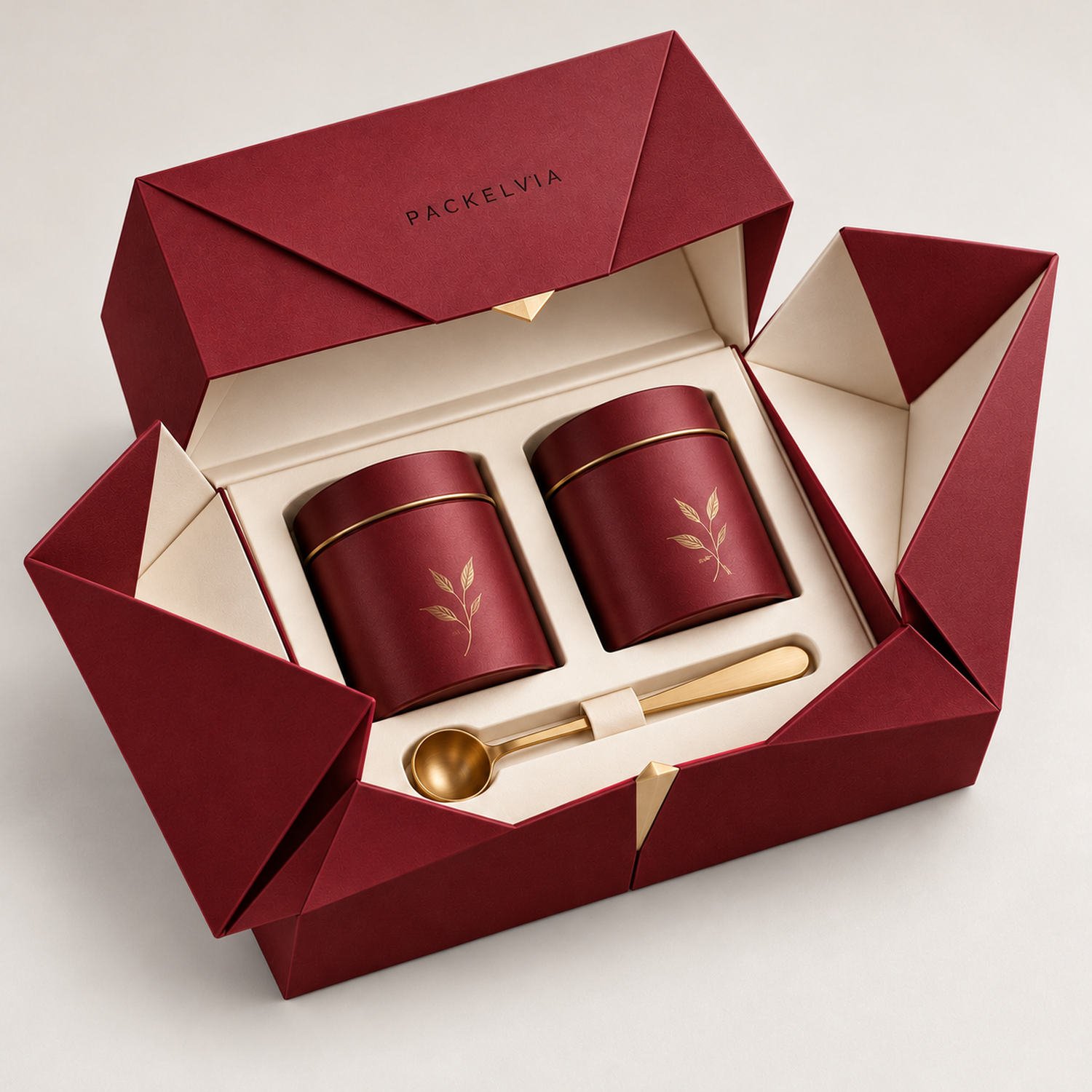
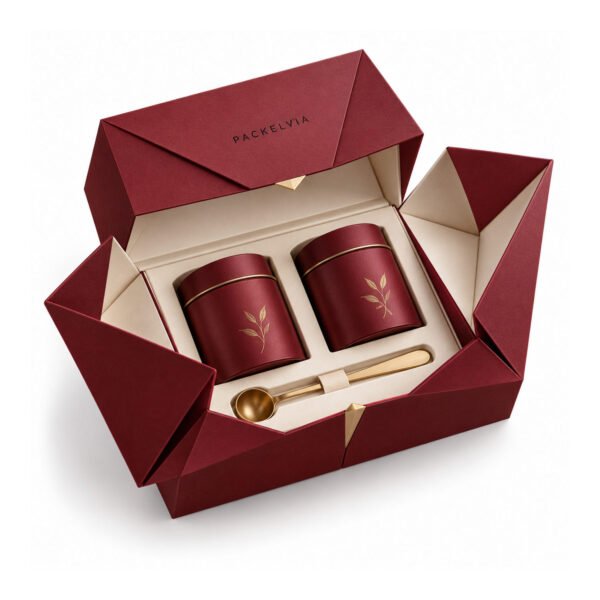
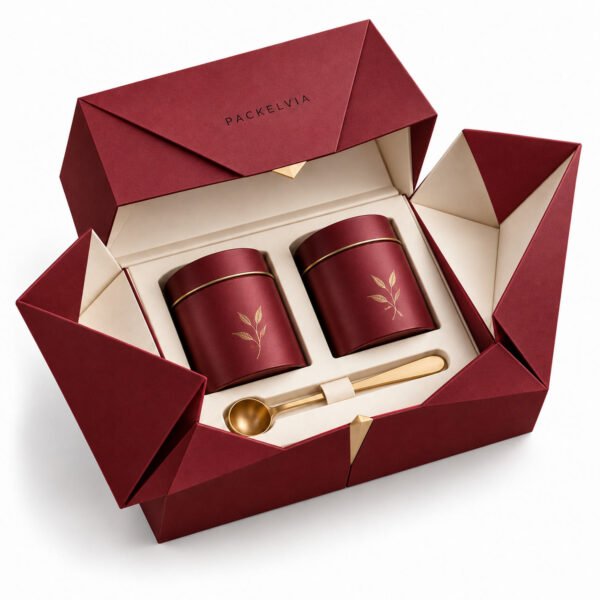
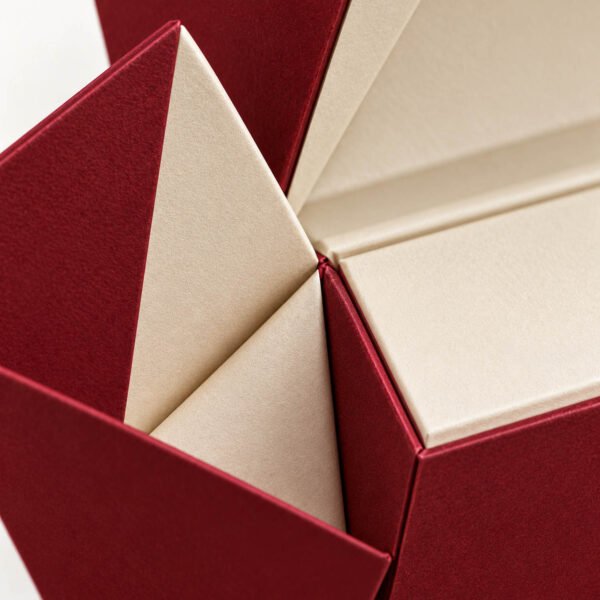
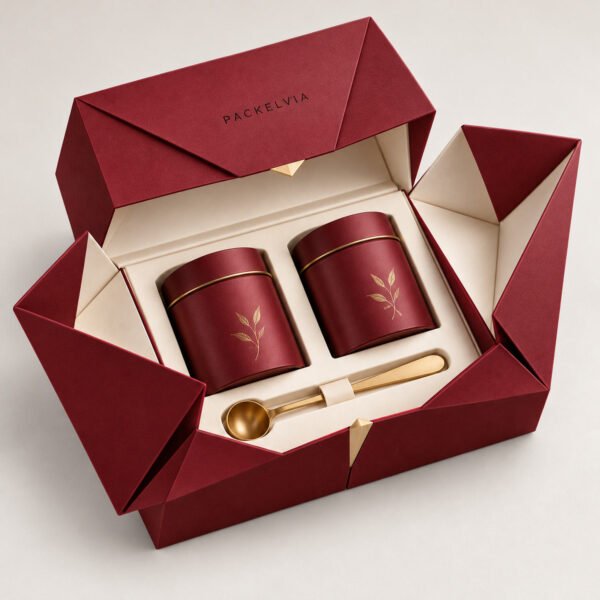
This envelope tea gift box is designed around folded burgundy panels rather than a separate lift-off lid. The panels fold inward around the top, creating an envelope-style pattern; the final overlap and closing order are confirmed on the sample.
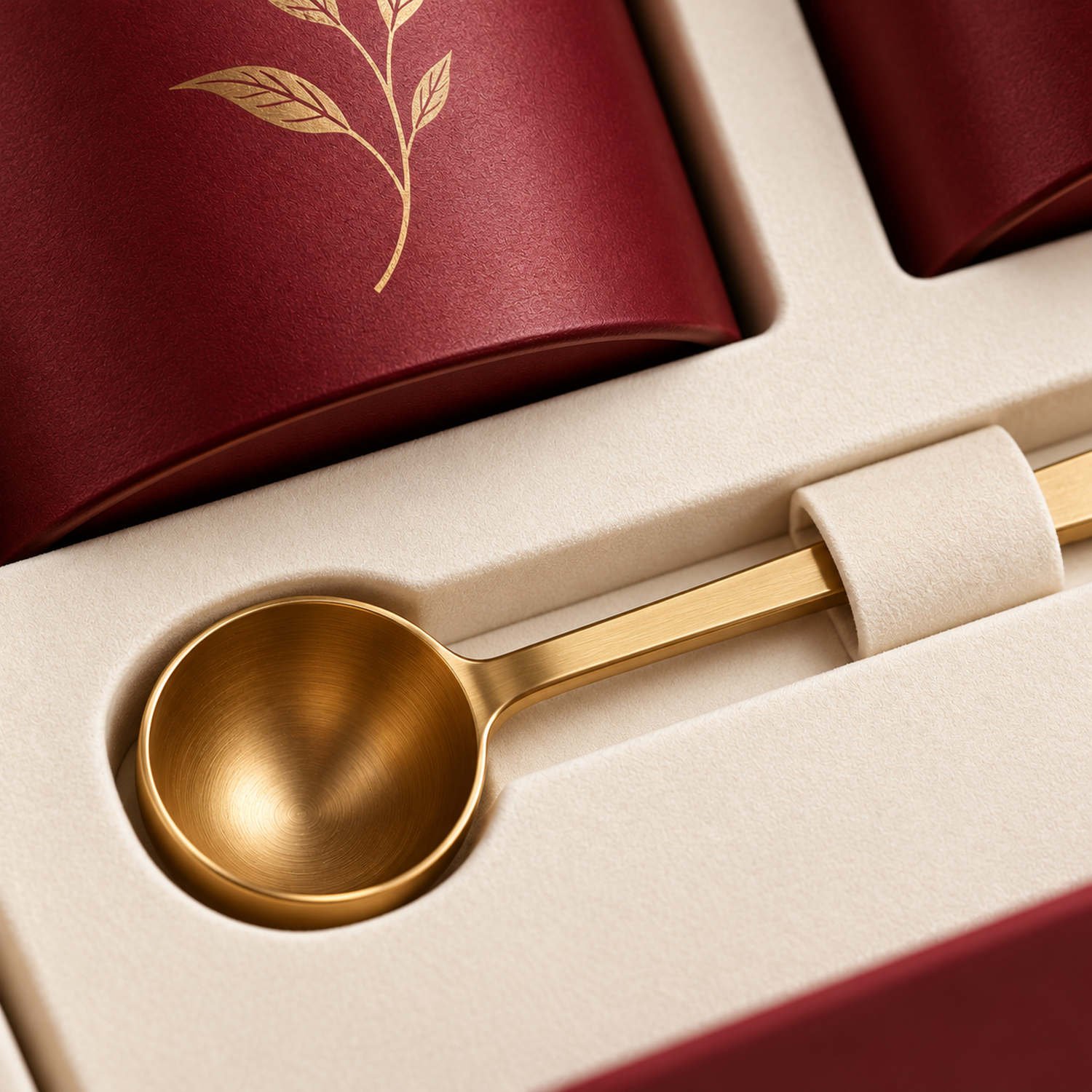
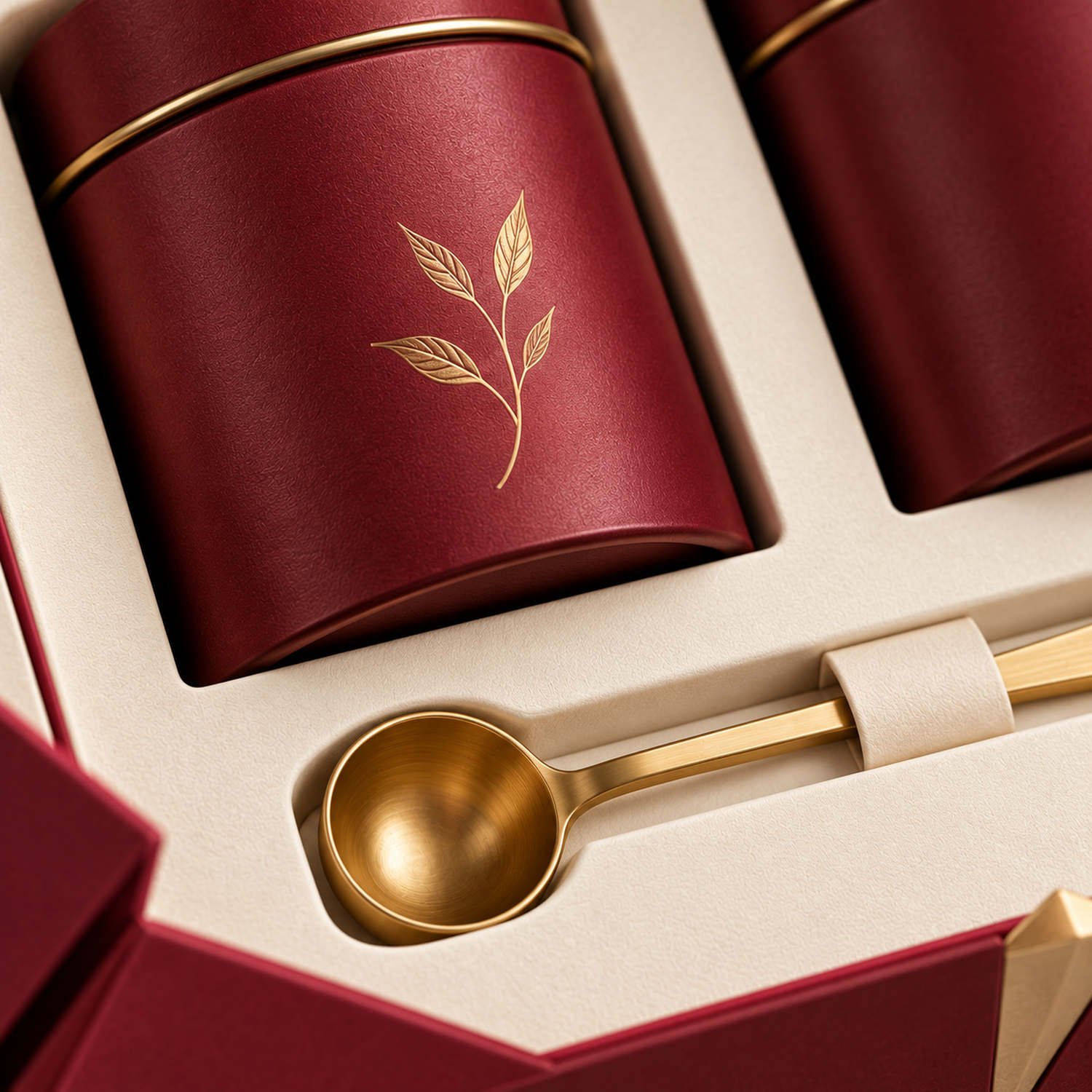
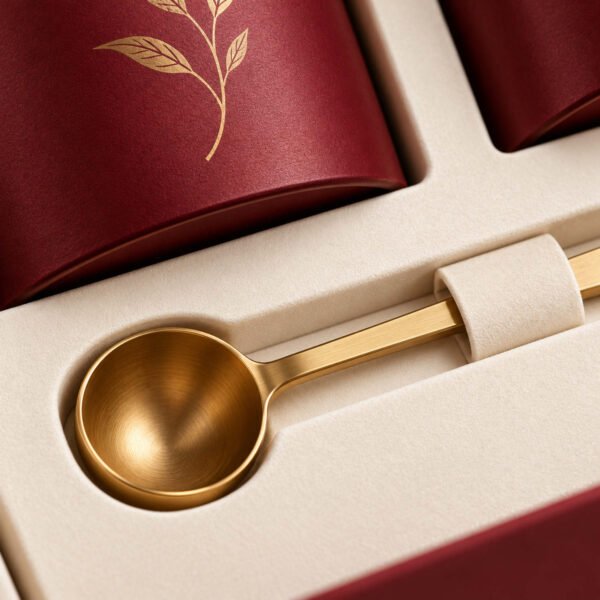
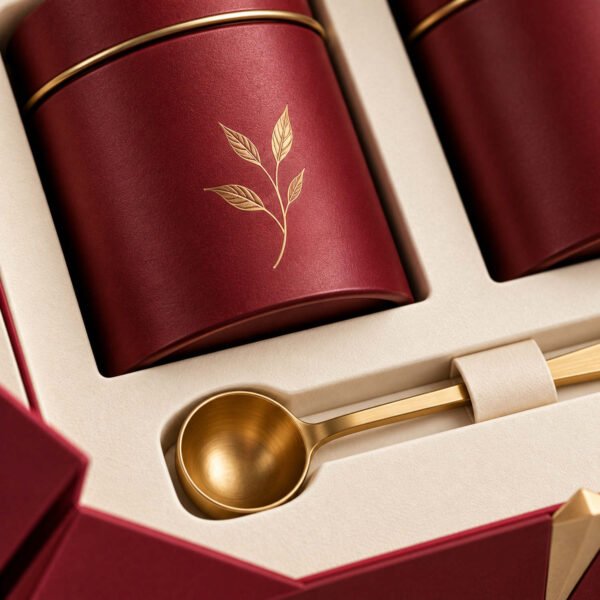
Inside is a cream insert with positions for two cylindrical tins and a tea scoop. The scoop position follows the wider bowl and narrower handle so the set can be presented together.
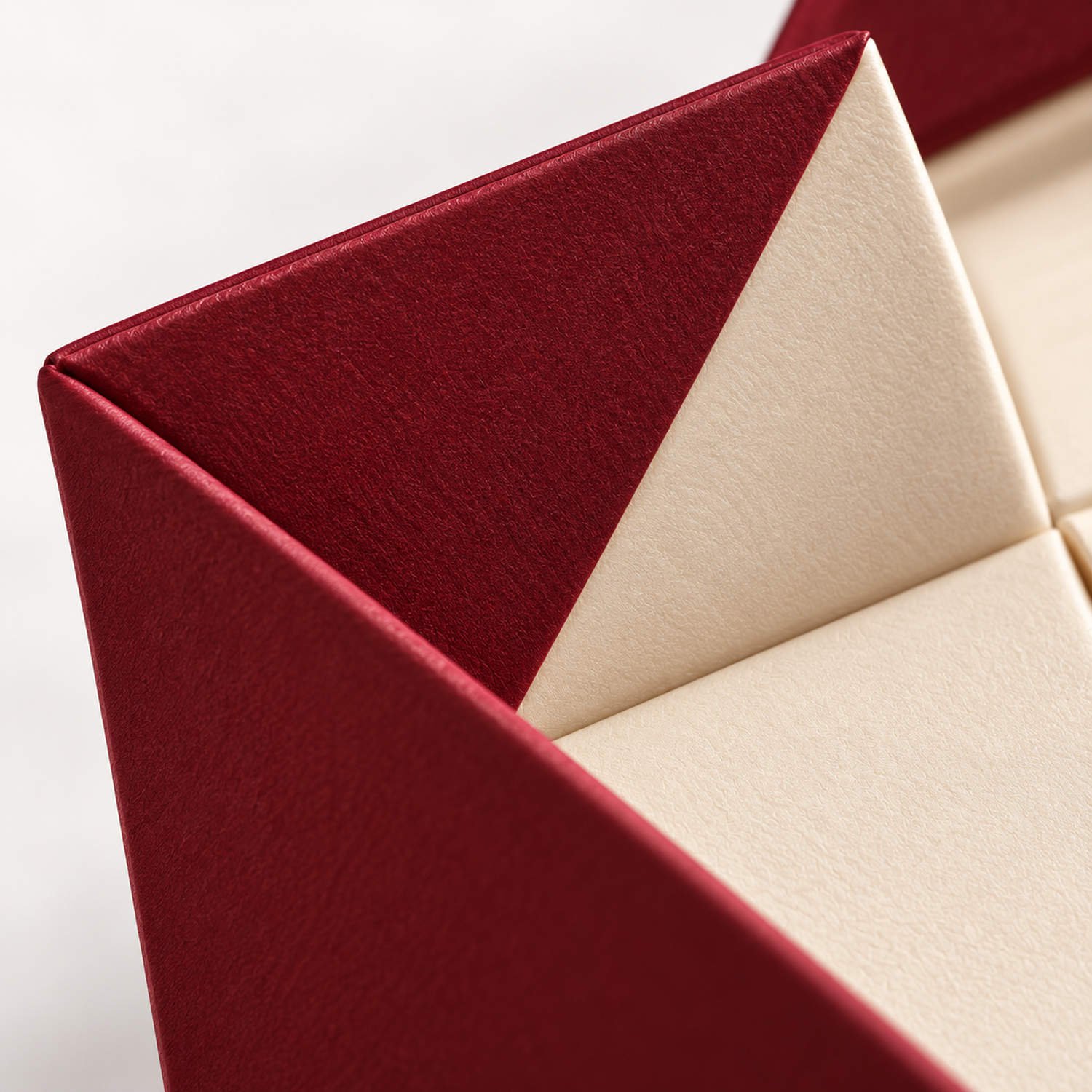
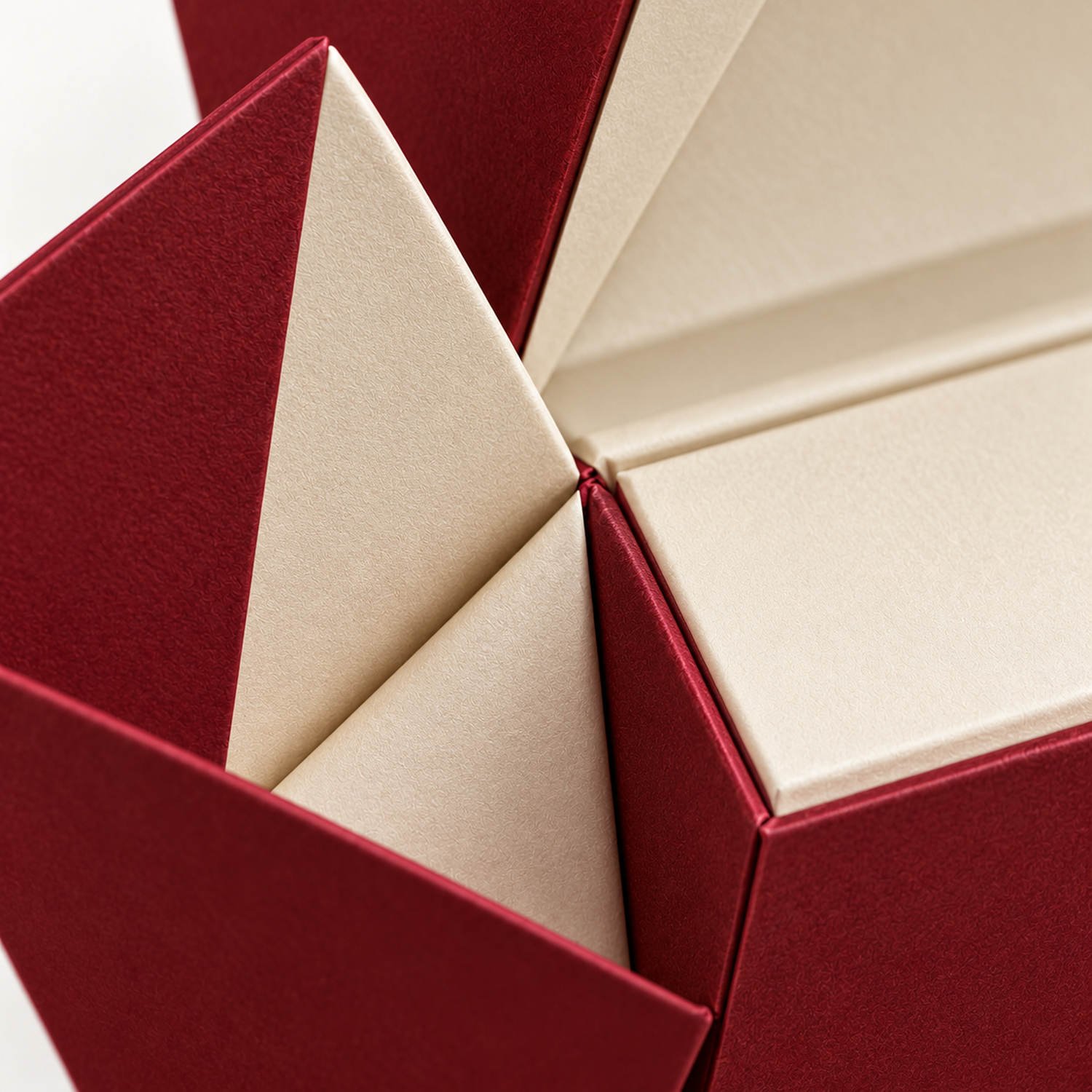
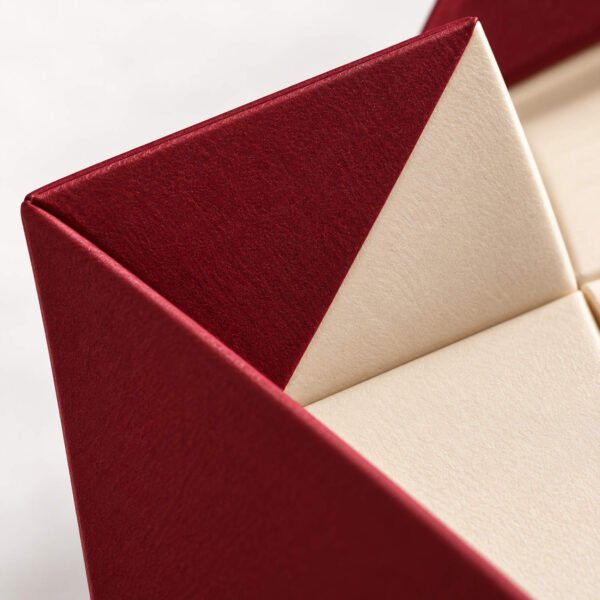
Opened, the panels fold outward around the insert, revealing both tins and the scoop. Opening angles and the space needed around the box are checked with the sample.
The tins and scoop shown inside are illustrative; the box and its insert are the product.
What you receive
One assembled box with the cream insert fitted inside, the top panels creased and folded to their agreed closing order, and positions made for two tins and one scoop.
The positions are developed around your contents, so the insert arrives empty and ready to fill. Tins, tea and the scoop are not included unless separately listed in the agreed supply scope.
Boxes are packed closed, with protective separation between layers as specified in the packing plan. Layer boards and clearance are reviewed so the folded tops are not compressed in transit.
Construction and materials
Two parts: the folded case and the insert.
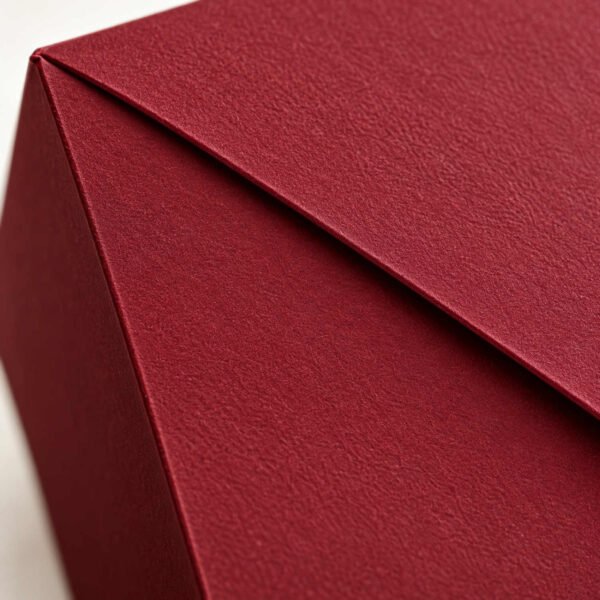
The case is a shallow body with folded panels that form the top closure. Creases guide the panels inward, and the panel edges overlap in the agreed sequence. The cream insert fits the inside floor; its material, attachment and removability are confirmed with the specification.
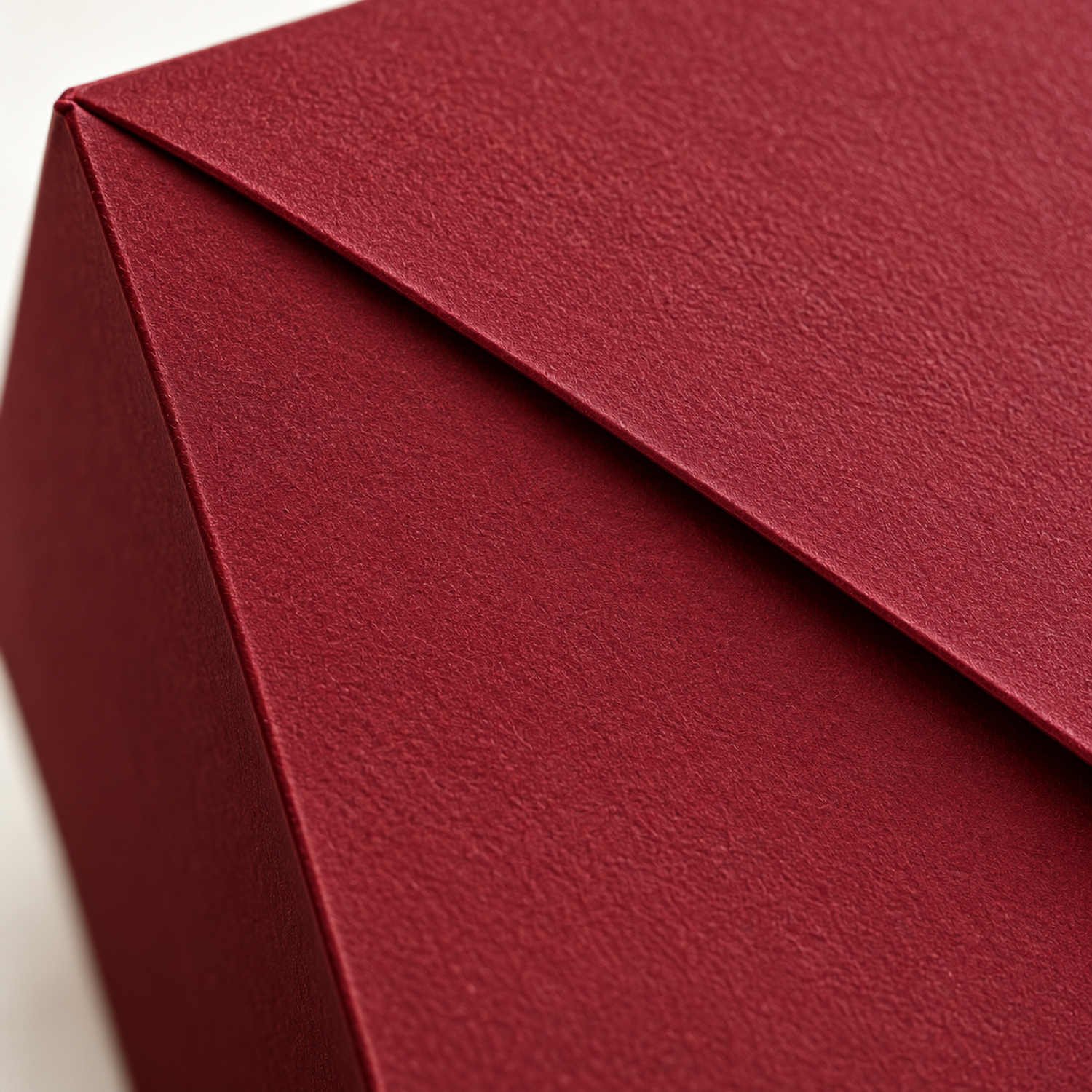
Board grade, paper, crease design and the closing method are confirmed on the approved sample; the images do not establish material specifications or tested performance.
The envelope fold
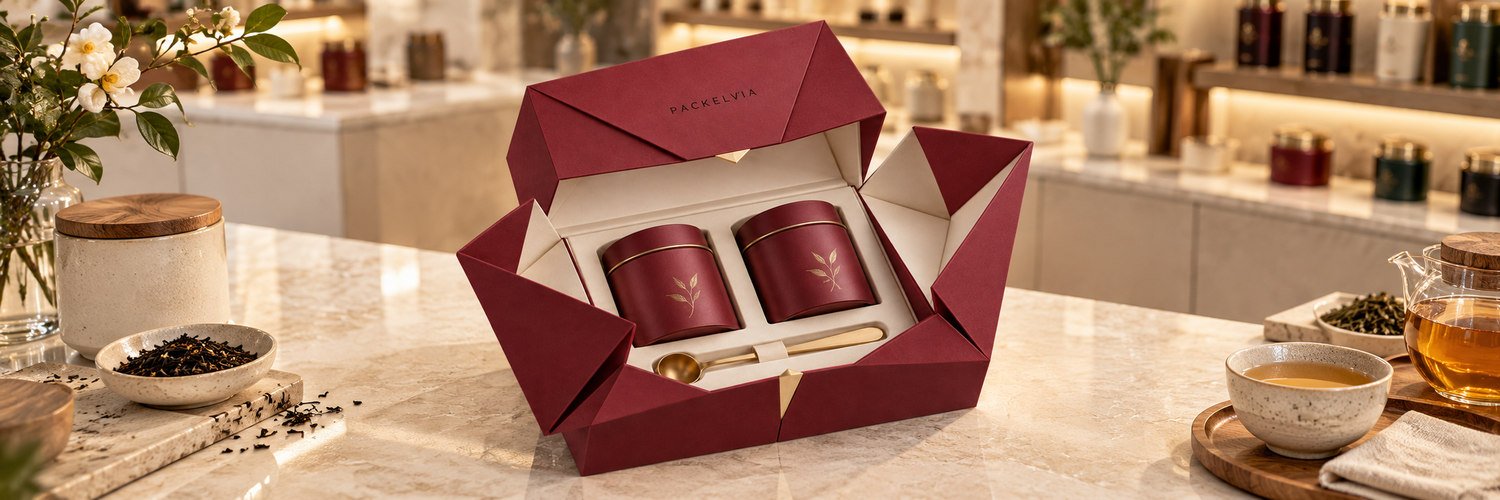
The envelope-style top needs room for the thickness of its overlapping panels. Panel lengths, cut-outs, crease positions and material thickness are developed together so the closed top sits neatly without forcing the edges.
The closing order affects both the fit and the visible pattern. Check that each panel can be tucked or overlapped without catching the adjacent edge, and that the final panel can be released comfortably.
Crease settings are tested in the selected board and paper. Excessive spring-back can leave gaps; unsuitable scoring or wrapping can cause cracking. Changes to the fold sequence may require revised tooling, depending on the approved construction.
How it opens
Release the first panel at its accessible edge, then unfold the remaining panels in the agreed sequence. The reference shows an envelope-style folded opening without an added ribbon; hidden closure components cannot be established from the image and are confirmed on the sample.
Close the panels in the demonstrated order, checking that their edges sit in the intended positions. Do not force a panel beneath another if the fold catches or the contents stand too high.
Opening effort, panel travel and whether the panels remain open by themselves are checked on the sample rather than assumed from the image.
Interior layout
The cream insert has two tin positions and a shaped scoop position. Tin diameter, height and stored orientation determine the seats and the clearance needed below the closing panels.
The scoop position follows a wider bowl seat and a narrower handle channel. The fit is developed around the actual scoop so it is supported and can be removed without forcing the handle or bowl.
Send the tin dimensions, scoop length and bowl size, or the actual items. Seat geometry, depth and finger access are confirmed before production; round tins do not necessarily require round openings in the visible top surface.
Colours and finishes
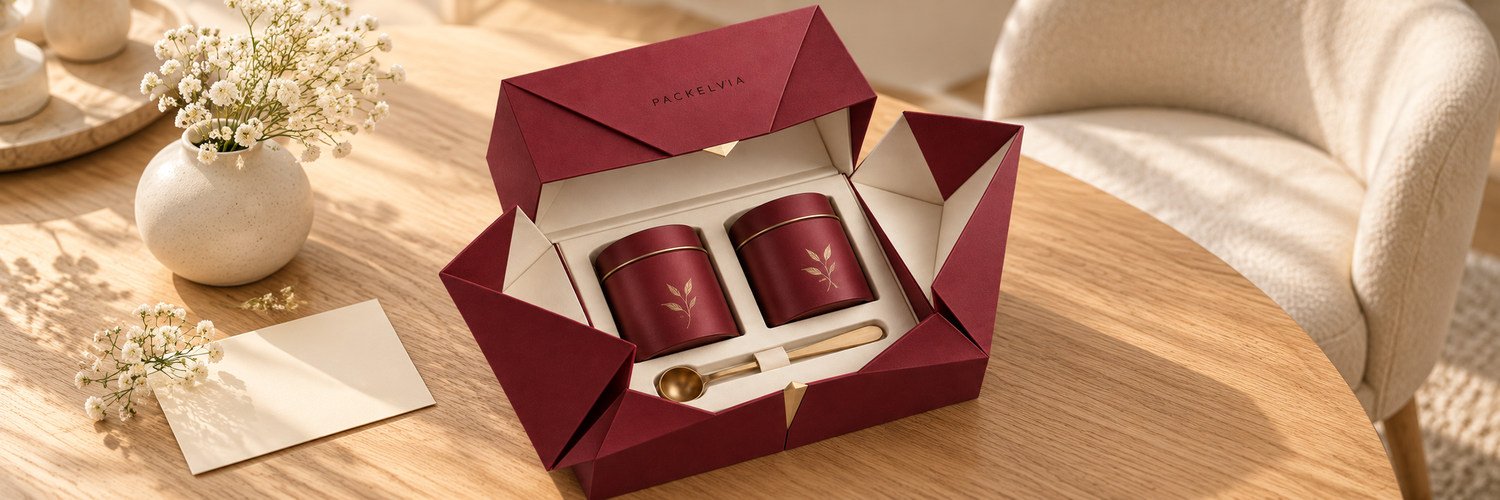
Reference colours are burgundy on the outer case and folded panels, cream for the insert and inner faces, with visible gold-tone accents. Case, insert and decorative details are specified separately, so the box can follow the reference contrast or use cream outside with a burgundy insert.
Finishes include plain wrap, printed artwork and foil lines. Keep fine foil details clear of working creases where practical, and check any artwork crossing a fold for cracking, alignment and wear on the sample.
Personalisation
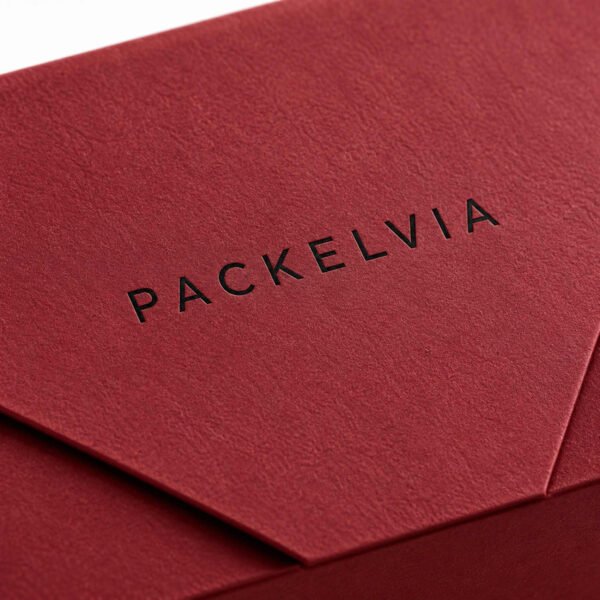
Printing can be placed on the folded panels, side walls and an agreed inner panel. Because the panels overlap, artwork should be positioned against the assembled view as well as the flat dieline. A design crossing the centre may be partly covered by the closure.
A small mark inside the first panel can become visible as the box opens. Confirm which panel opens first before placing the artwork.
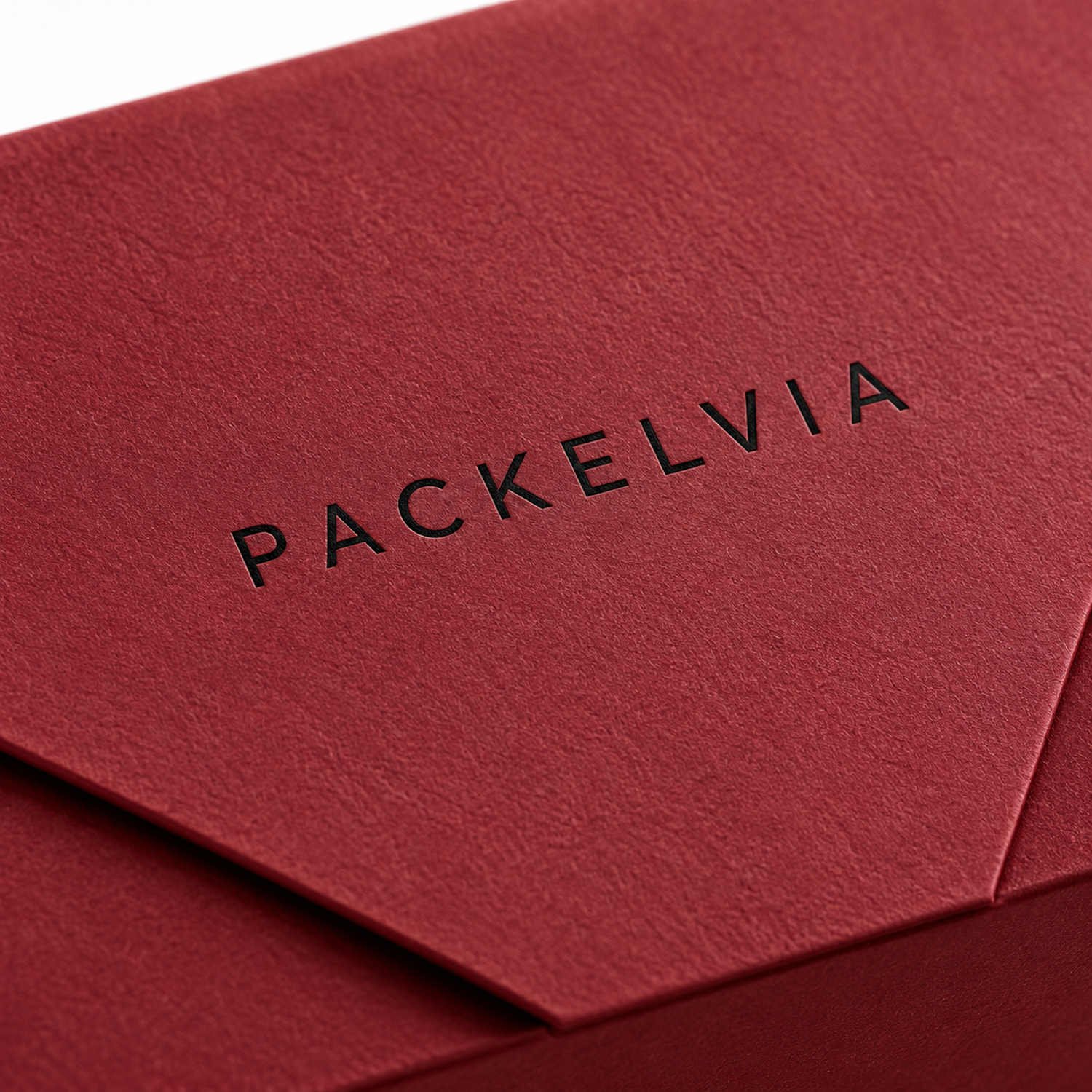
Logo position, colour and any foil placement are checked on the sample with the final fold sequence.
Preparing Illustrator artwork? See Adobe’s guide to packaging artwork files before sending linked assets and fonts.
Care and reuse
The box is paper-based and uses working creases: keep it dry, wipe with a dry or barely damp cloth, and do not press the closed top under heavy objects.
Repeated folding can soften or wear the creases. The usable opening life depends on the selected construction and materials; no fixed number of openings is established by the images.
Keep the box closed and flat when stored. After the tea set is removed, it can be reused for small, light objects that fit the insert.
Dimensions and specifications
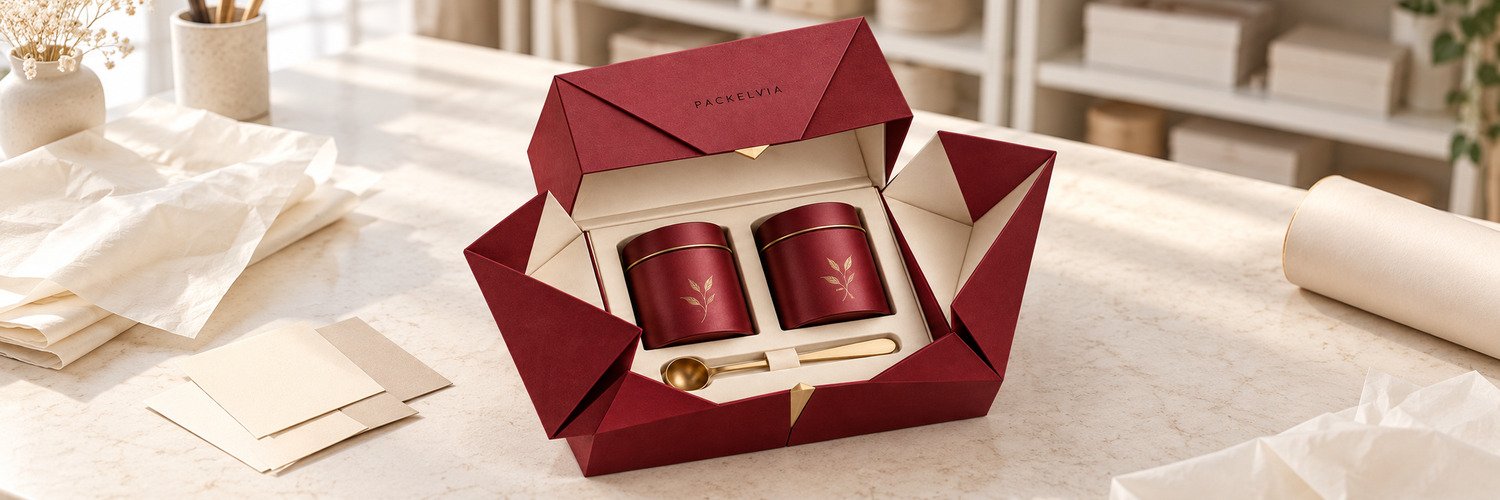
| Reference | PK-TC-08 |
|---|---|
| Type | Tea gift box, envelope-style fold top |
| Structure | Shallow body, folded top panels, fitted cream insert |
| Closure | Overlapping envelope-style fold; tuck and any additional fixing confirmed on sample |
| Contents layout | Two tea tin positions and one shaped scoop position |
| Tin seat depth | Developed with tin height and clearance below the closing panels |
| Scoop cavity | Wide bowl seat plus narrow handle channel; fit confirmed with the scoop |
| Dimensions | Made to your tins and scoop — length, width, height and cavity sizes to be confirmed |
| Board and paper | Confirmed on the sample |
| Crease and fold order | Developed with the dieline and confirmed on sample |
| Colour options | Case, insert and decorative details specified separately |
| Finishing | Plain wrap, printed artwork, foil lines |
| Minimum order | 500 boxes for custom production; smaller quantities to be confirmed |
| Packing | Closed; protective separation and layer boards as agreed in the packing plan |
| Contents | Box and insert only; tins, tea and scoop are illustrative and supplied separately |
Delivery and lead time
Start with a sample, and send one tin and the scoop you intend to use. Tin height and stored orientation determine the insert depth and closing clearance, while the scoop’s bowl and handle determine its seat.
Send the tin diameter and height, the scoop length and bowl size, the quantity and the date you need it by. The sample is made to that specification; production follows approval, with the artwork and packing method signed off at the same time. Lead time depends on the dies, crease work and finishing, and is confirmed per order once the specification and date are known.
Frequently asked questions
Are the tins and scoop included?
No. The box and its insert are the product; the tins, tea and scoop in the images are illustrative and supplied separately unless listed in the agreed supply scope.
How does the box stay closed?
The proposed top uses overlapping envelope-style panels in an agreed closing order. Tuck engagement and any additional closure components are confirmed on the sample; hidden fixings cannot be determined from the image alone.
Can it be opened and closed many times?
Repeated folding can soften the creases. Opening life depends on the board, paper and crease construction and is assessed on the sample; no fixed number of cycles is claimed.
Does the insert fit any tin?
No. It is developed around your tin diameter, height and stored orientation, together with the scoop’s length and bowl size. Send the actual items or their exact measurements.
Can the panel fold order be changed?
A change may require a revised panel layout, crease pattern or die. Review it before tooling, since it affects both the closure and the visible overlap pattern.
Is it suitable for food?
The box is packaging, not a food-contact article. Tea stays in its own suitable sealed tin; any direct-contact or barrier requirement is specified separately and confirmed on the sample.
Compare the crescent tea tin gift box for a four-tin arrangement, or explore our tea and coffee packaging collection.
Review materials, printing and finishes, or send your tin and scoop dimensions for a sample.
Images are AI-generated packaging design visualizations, not photographs of a verified production sample. Final materials, construction and fit are confirmed through specification review and sample approval.


