


Product description
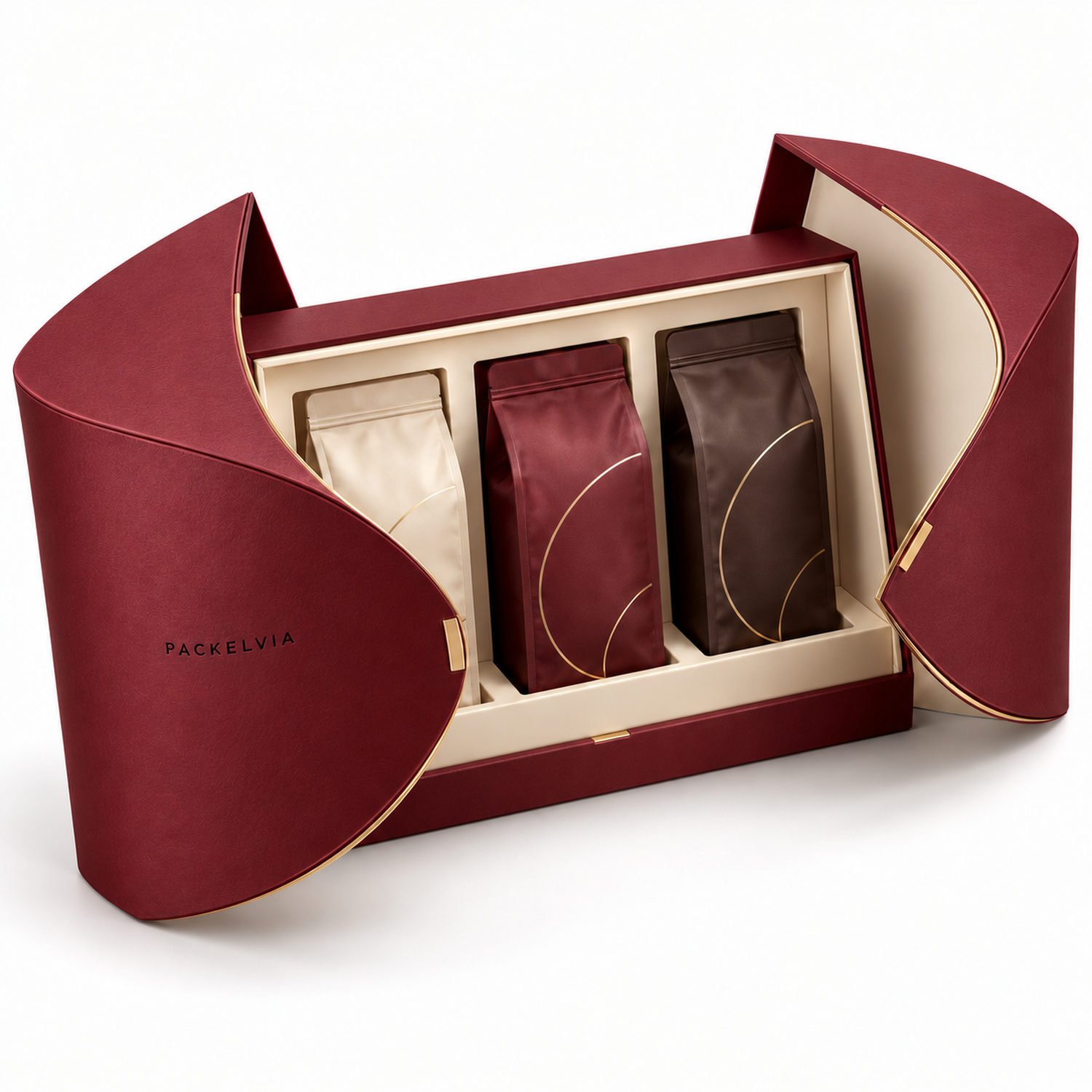
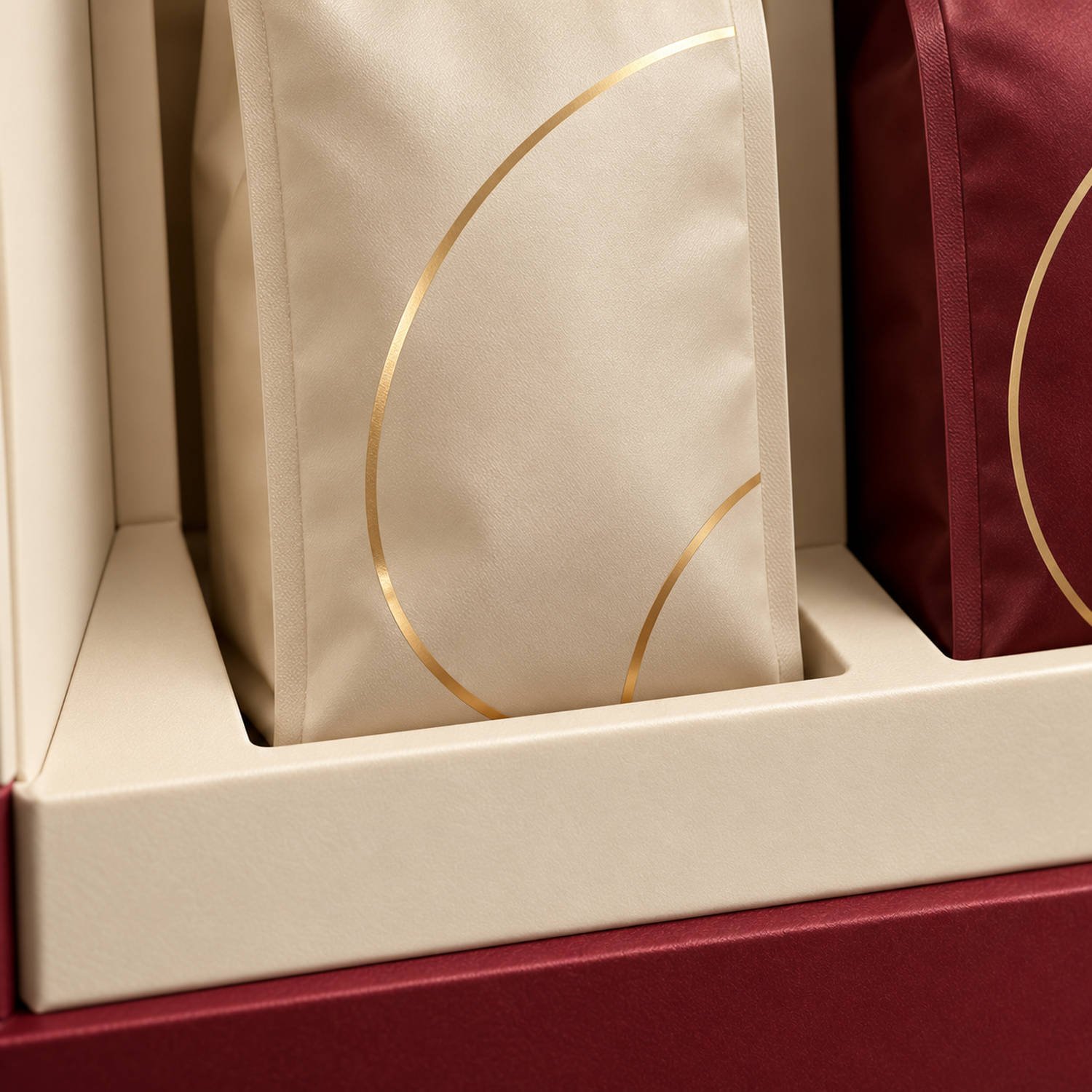
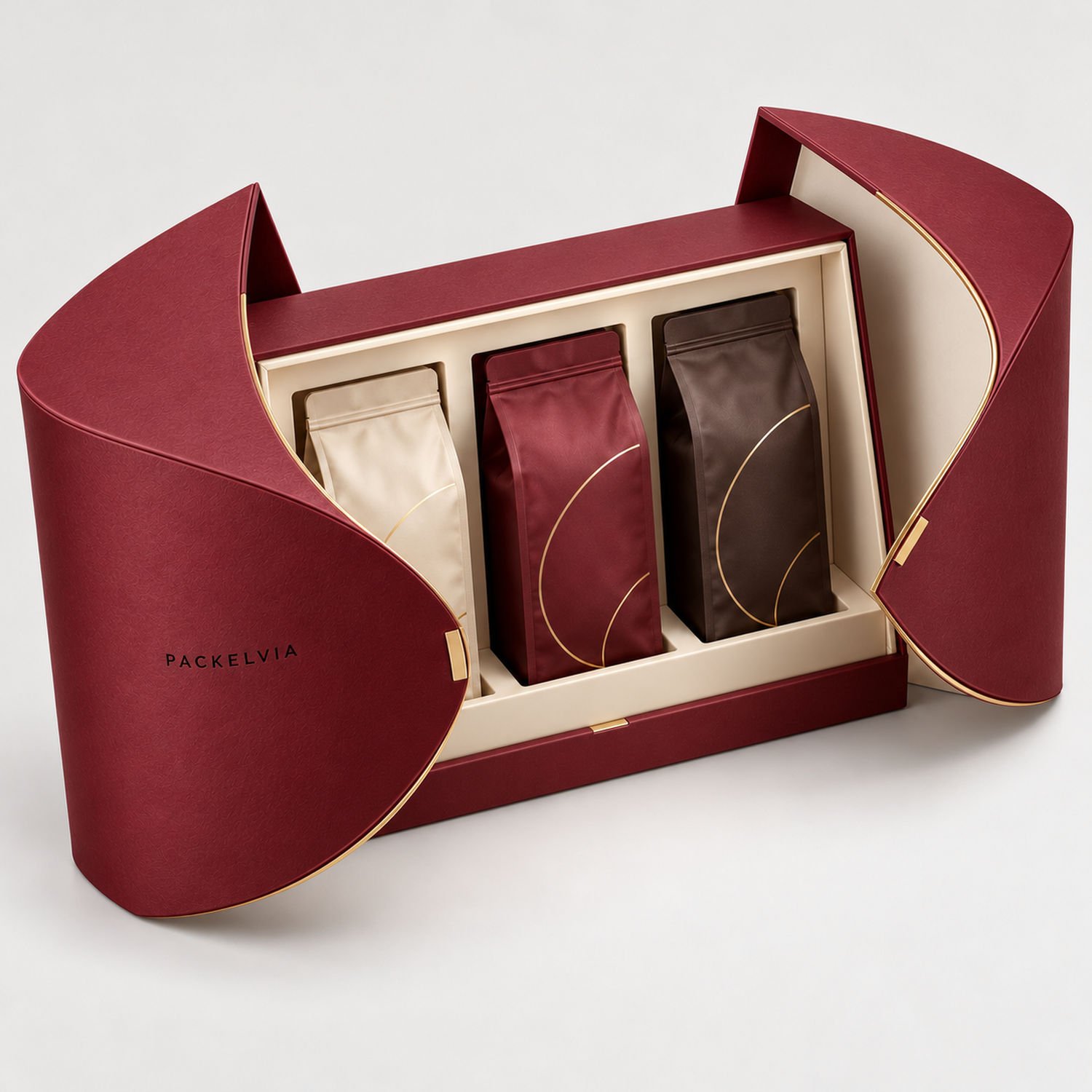
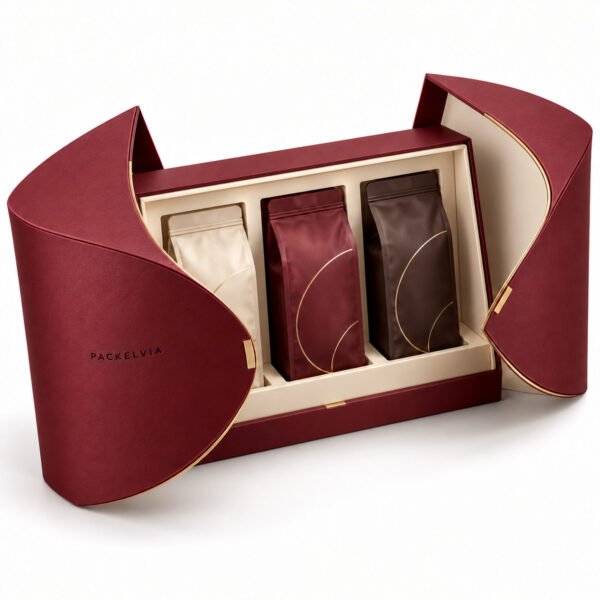
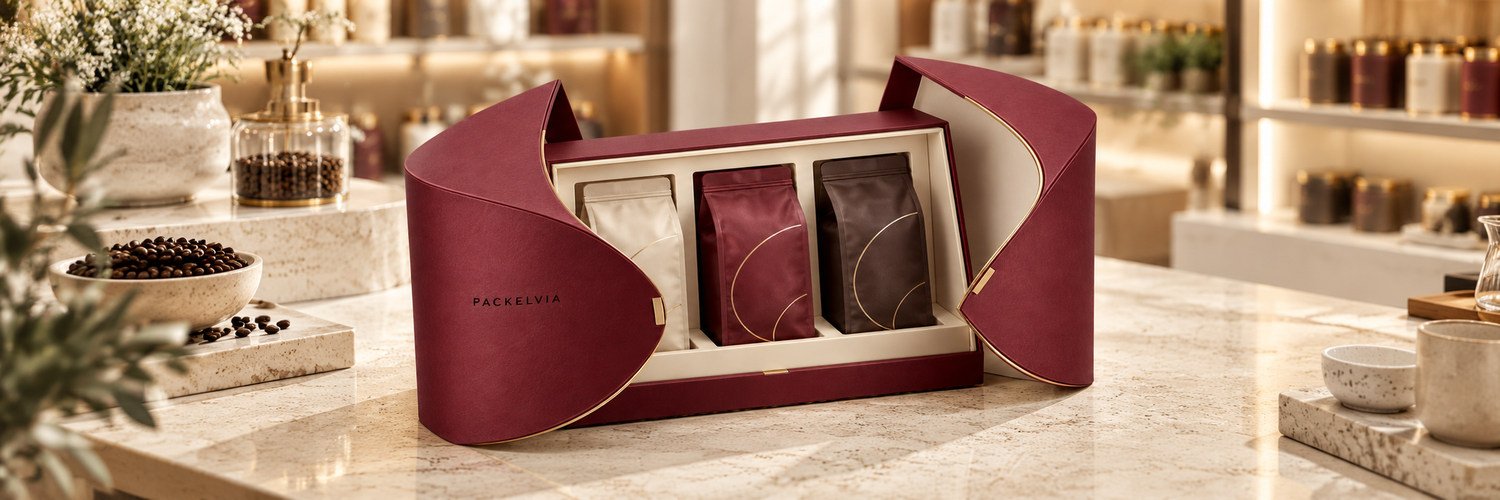
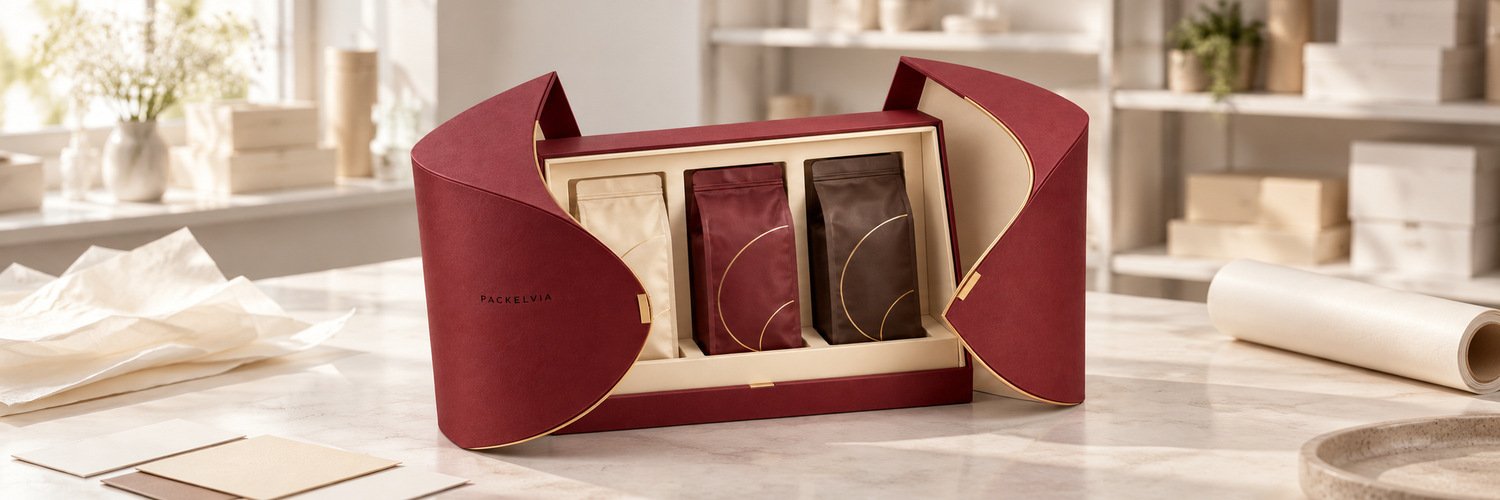
This curved wing coffee discovery box is built around a cream-lined tray with three pouch positions side by side. The reference presents the pouch faces together, framed by two open burgundy curves.
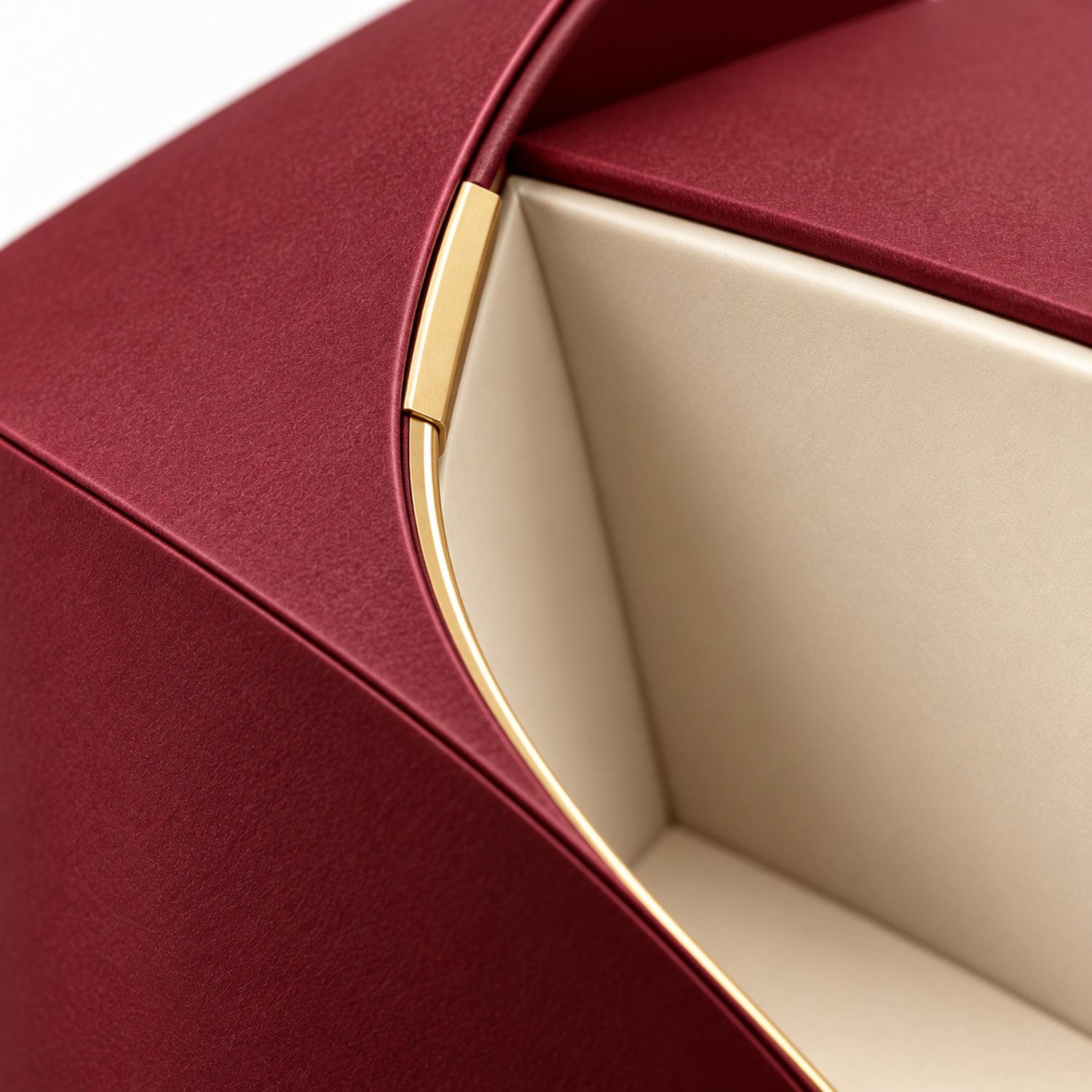
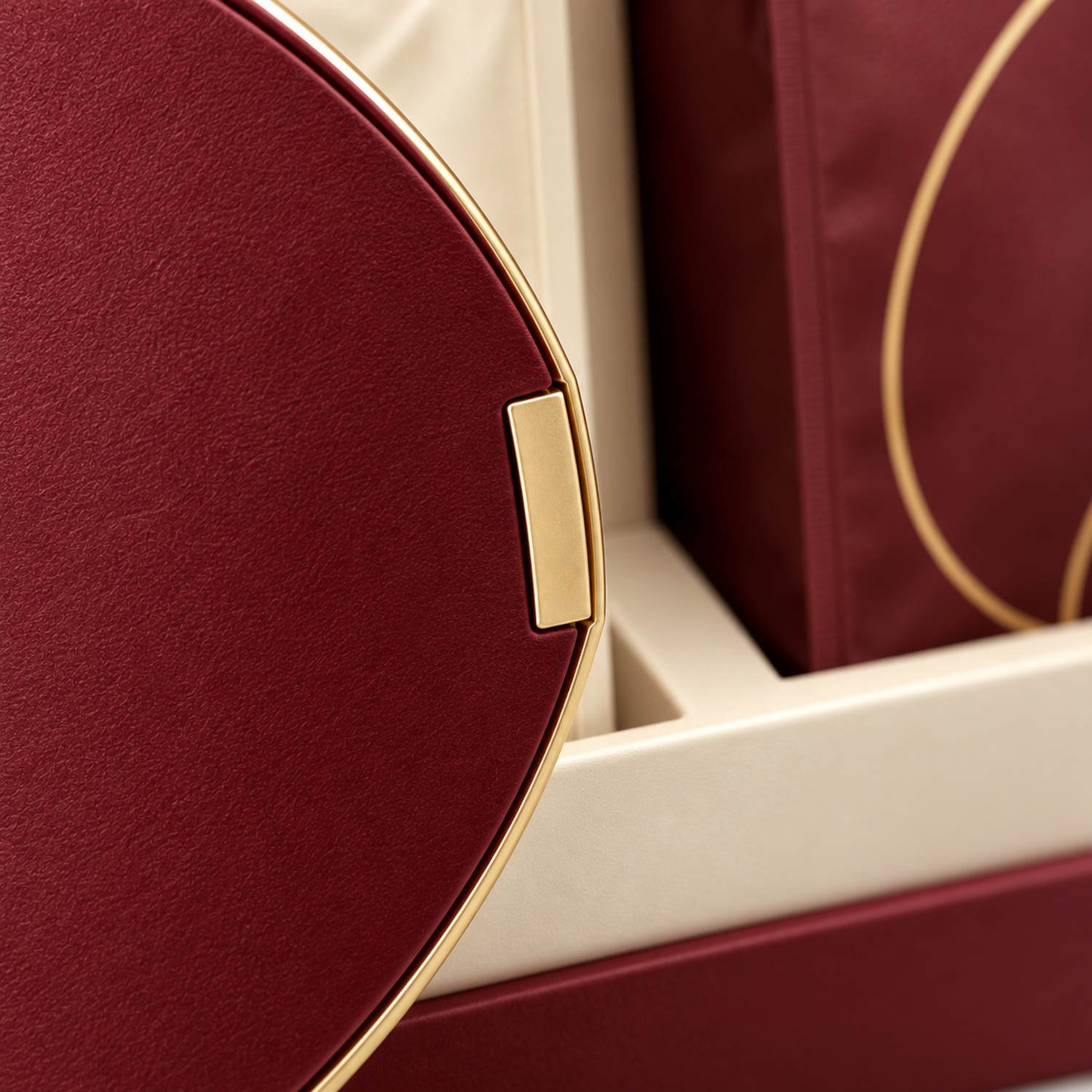
The curved panels — the wings — connect around the tray and open outward. Their closing path, joint locations and meeting edges are developed with the pouch dimensions and confirmed on the sample rather than inferred from the open image.
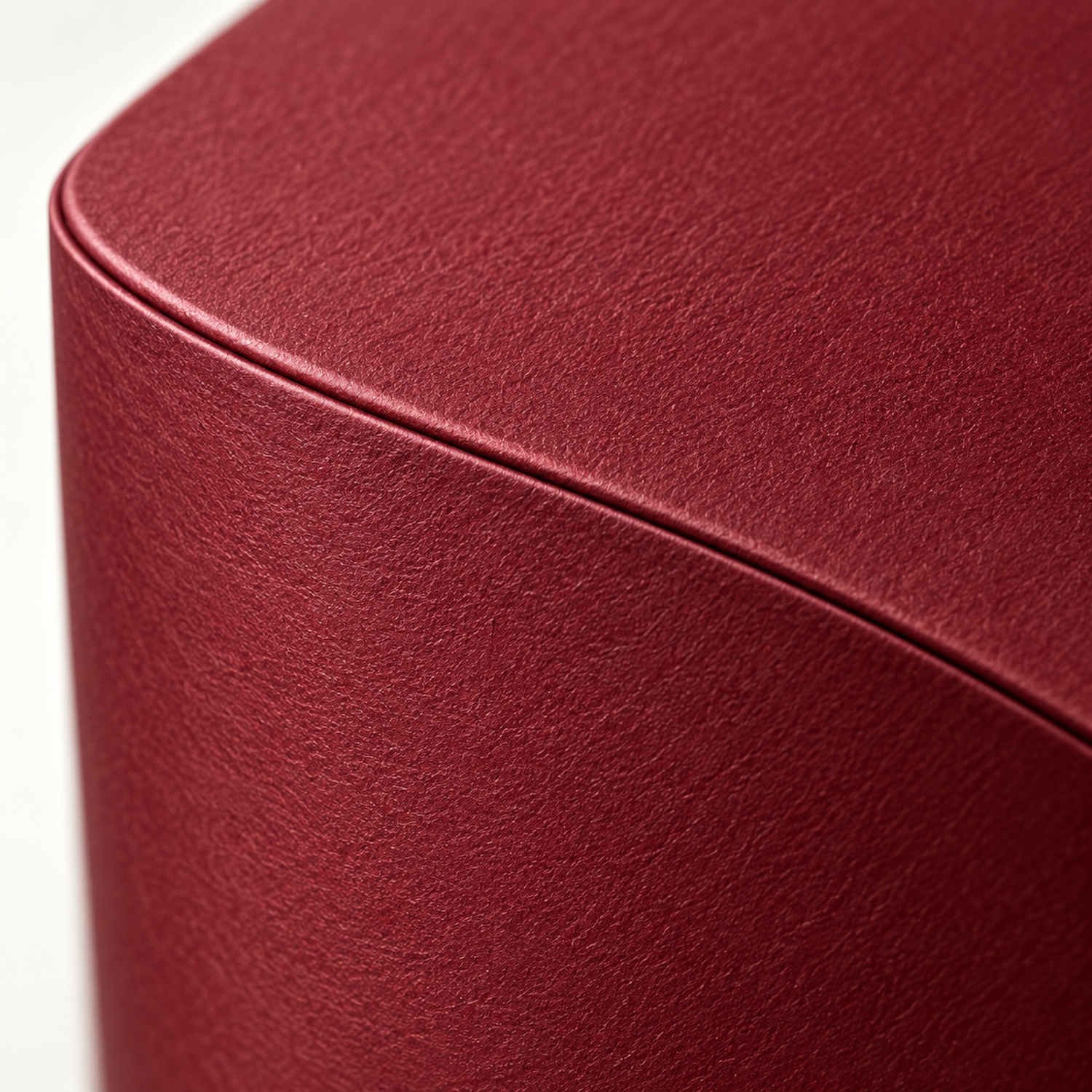
Burgundy outer surfaces contrast with the cream interior and visible gold-tone accents. Pouches shown in the tray are illustrative; the tray and wings are the product.
What you receive
One assembled box with the cream-lined tray, three agreed pouch positions and both curved wing panels attached.
Nothing needs assembling. Coffee is not included, and this is not a barrier pack — coffee stays in suitable sealed primary packaging, which the tray holds as supplied.
The box is packed in its approved closed configuration with protection for the wing edges. Bands, end fitments and clearance from the carton walls are specified in the packing plan and checked with the sample.
Construction and materials
Three main elements: the tray, the two wings and the lining with its divisions.
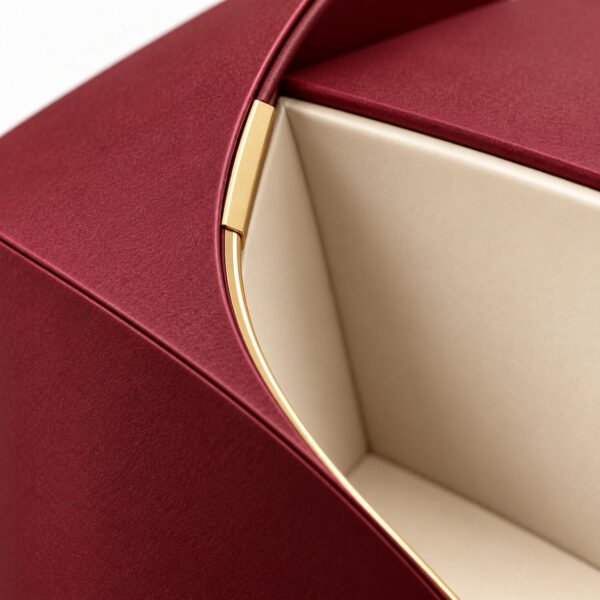
The tray is a shallow rigid structure with cream fitted positions for three pouches. Curved outer panels frame the tray when open and form part of the proposed closing structure.
Board, paper, wing attachment, forming and interior construction are confirmed on the approved sample. The images do not establish a particular mould, lamination method, bottom-edge hinge arrangement or tested performance.
The two wings
The two curves define the presentation. Their profiles and relative alignment are developed together so the open arrangement looks balanced and the closed configuration fits around the contents.
Possible construction methods depend on the selected board, paper and geometry. Forming, laminated components or other suitable methods are reviewed at the sample stage; both wings need not necessarily come from one tool or be exact mirrors unless the approved design requires it.
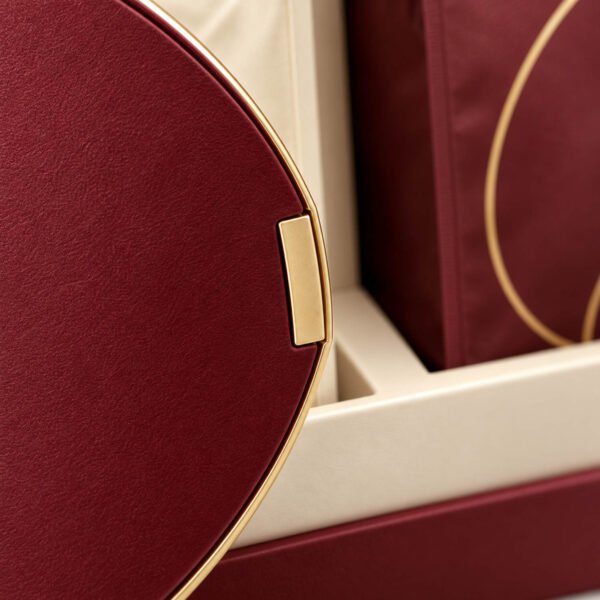
Check the formed surfaces, free edges and attachment points for unevenness, lifting wrap and unwanted flex. Handle the panels without forcing their curves flat.
Wing profiles, material construction and any permitted adjustment are agreed before production.
How the wings close
The reference image shows the wings open. The final closing sequence, seam shape and meeting-edge clearance are therefore confirmed with the structural drawing and sample.
Check the entire closed seam for consistent alignment, with both wings moving without interference. Whether the edges meet on a straight or curved line depends on the approved geometry.
Any catch, magnet, tuck or other retaining feature must be specified rather than assumed present or absent. A transport band may secure the package for packing, but it is not a substitute for agreeing how the unbanded box stays closed.
Closing effort, seam gap and retention are checked on the sample.
Interior layout
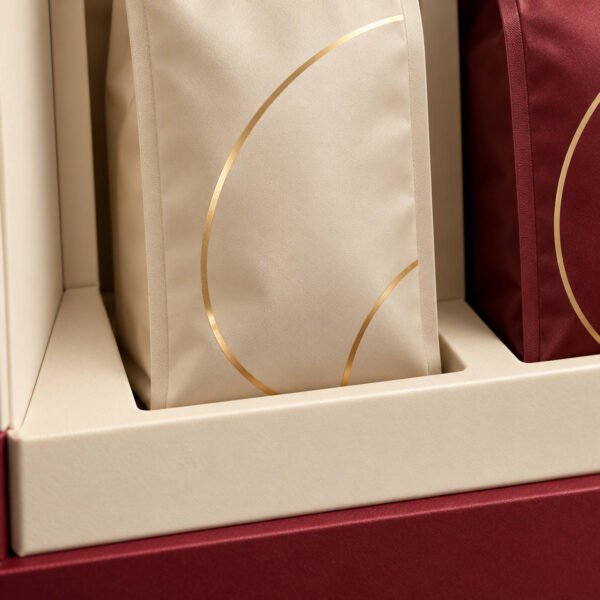
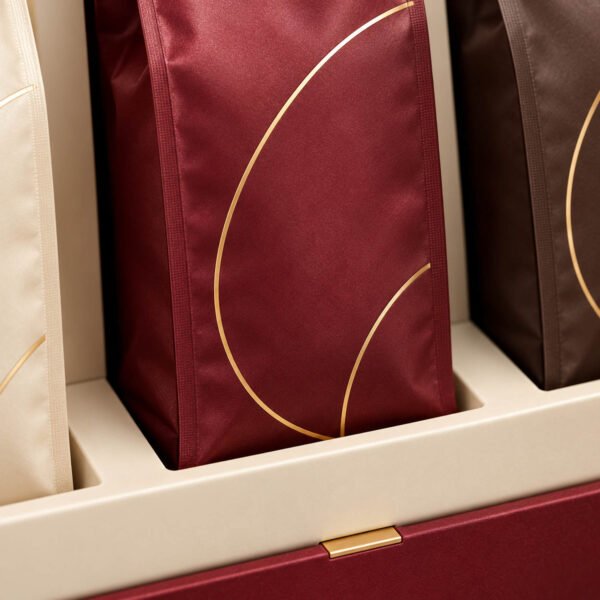
Three pouch positions sit side by side so the selection is visible together. Each position is sized from the complete filled pouch, including seams, gussets and trapped air, with clearance for comfortable insertion and removal.
Divider height and support shape are developed around the intended pouch orientation. They can contribute to support even when the pouch tops remain exposed; the image does not establish a fixed one-third exposure or a particular standing edge.
Send the width, height and depth of each filled pouch, plus the required count and desired viewing angle. Check that the dividers do not bulge the bags or rub their sealed edges.
Clearance when closed
The space inside the closed wings is a working dimension. Clearance must be checked around all three filled pouches throughout the closing movement, not just at the final closed position.
The available space varies with the actual wing profile. Pouch tops, sealed seams and projecting corners must not be pressed or caught as the panels move.
Close and reopen the sample with real filled pouches. Check for contact marks, creases, compressed packs and interference at each position. The absence of a visible line alone does not establish sufficient clearance.
Wing depth, pouch height, movement path and the permitted filled-pack variation are reviewed together.
Colours and finishes
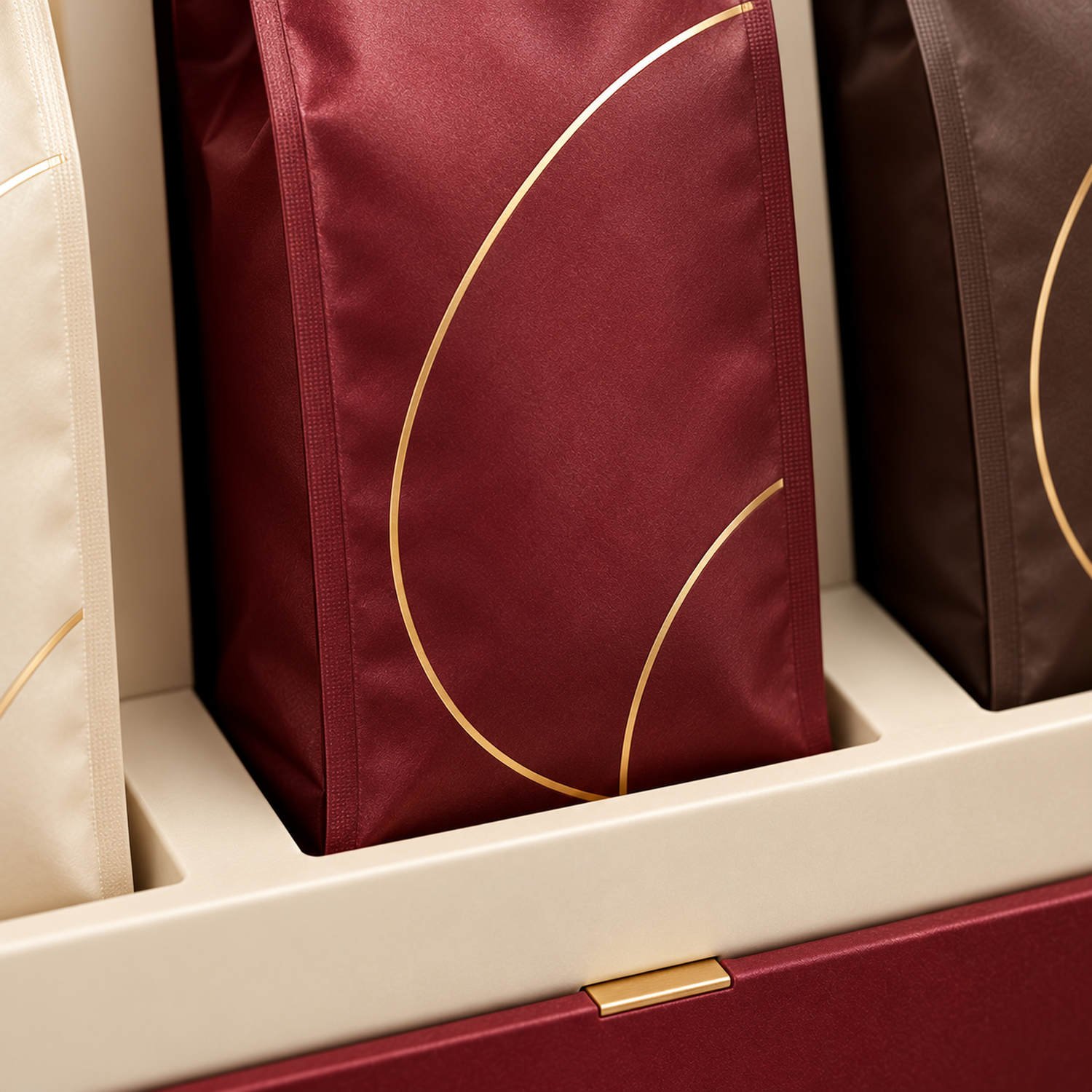
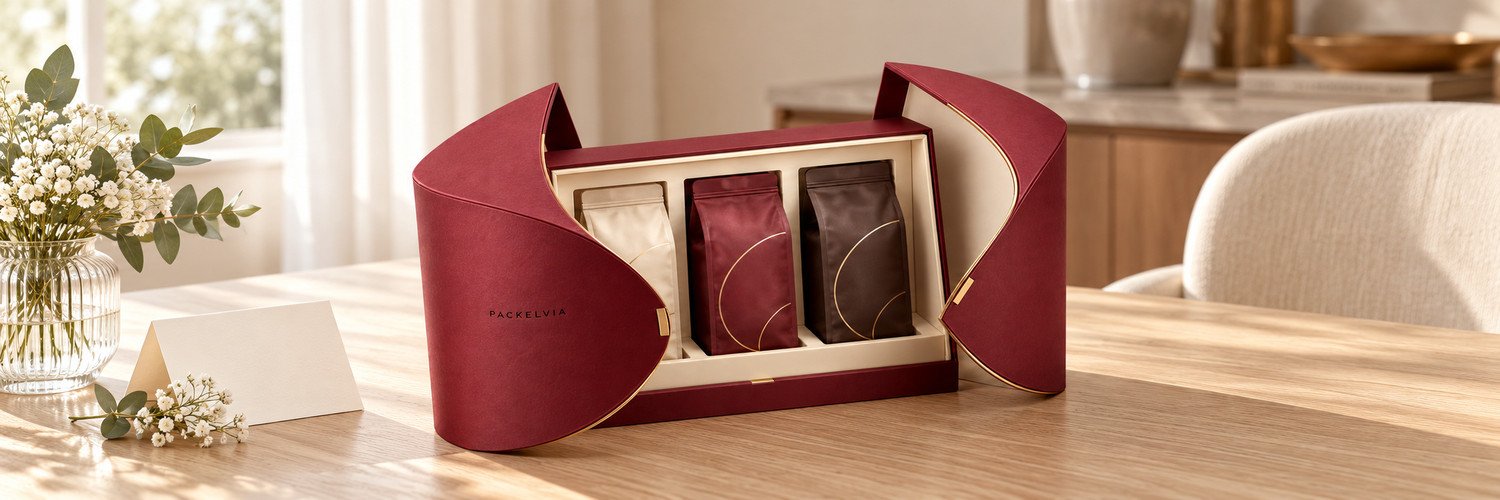
Reference colours are burgundy on the wings and tray exterior, cream inside, with visible gold-tone edge accents. Wings, tray and lining are specified separately, so the design can follow the reference contrast or use cream wings around a burgundy tray.
Finishes include plain wrap, printed artwork and foil lines. On the curved panels, check that the chosen wrap follows the profile and finishes cleanly at the free edges. Colour, bonding and decorative alignment are reviewed on the formed sample.
Personalisation
Printing can be placed on the outer wing faces and suitable tray areas beside the pouch positions. The wings provide prominent brand surfaces in the agreed closed configuration.
Inner panel artwork can be kept restrained to frame the coffee, while short varietal lines beside the slots can identify the selections. Available space and legibility are checked with the actual pouches in place.
Artwork is developed against the dieline and assembled views so logos, curves, joints and closing seams are considered together.
Preparing Illustrator artwork? See Adobe’s guide to packaging artwork files before sending linked assets and fonts.
Care and reuse
The box is paper-based with curved panels: keep it dry, wipe with a dry or barely damp cloth, and support the tray rather than lifting by the wings.
Avoid placing heavy objects on the closed panels or forcing the wings beyond their agreed opening range. Store the box in its approved configuration without compressing the curves.
Measure the open footprint on the sample before choosing a shelf or table. It depends on wing size, joint position and opening angle; no fixed multiple of the closed width is established by the image.
Dimensions and specifications
| Reference | PK-TC-05 |
|---|---|
| Type | Coffee discovery box, curved wing panels around a tray |
| Structure | Cream-lined tray with three pouch positions and two connected curved panels |
| Wings | Profiles, forming method, material construction and attachment confirmed on sample |
| Closure | Closing path, seam geometry and any retaining components specified with the sample |
| Seam | Gap and alignment checked in the approved closed configuration |
| Interior | Three positions; divider height and support developed around filled pouches |
| Closed clearance | Checked with real filled pouches throughout the panel movement |
| Opened footprint | Measured on sample at the intended opening angle |
| Dimensions | Made to your pouches — tray dimensions, wing profile and depth to be confirmed |
| Board and paper | Confirmed on the sample |
| Colour options | Wings, tray and lining specified separately |
| Finishing | Plain wrap, printed artwork, foil lines |
| Minimum order | 500 boxes for custom production; smaller quantities to be confirmed |
| Packing | Approved closed configuration; bands and protective fitments as agreed |
| Contents | Tray and wings only; pouches are illustrative and supplied separately |
Delivery and lead time
Start with a sample, and send three filled pouches. Check the closed panel alignment, clearance around the pouch tops, the balance of the two curves and the actual open display footprint.
Send the filled pouch width, height and depth, quantity of boxes and required arrival date. The sample is made to that specification; production follows approval, with artwork and packing method signed off at the same time. Lead time depends on wing construction, dies and finishing, and is confirmed per order once the specification and date are known.
Frequently asked questions
Are the coffee pouches included?
No. The tray and two wing panels are the product; pouches in the images are illustrative and supplied separately.
How does the box stay closed?
The final closure is specified with the structural design and sample. The open image does not establish whether a catch, magnet, tuck or other retention feature is present. Transport bands are agreed separately in the packing plan.
Why is the gap along the top important?
The meeting-edge alignment is part of the finished appearance and closing fit. Seam shape and clearance are checked across the complete closed sample rather than assumed from the open image.
Will the wings press my pouches?
Clearance is developed around your filled packs and checked throughout closing and opening. Real pouch samples are used to look for interference, compression, catching and surface marks at all three positions.
Do both wings have to be identical?
Their profiles must work together in the approved design. Whether they are exact mirrors or use different profiles depends on the structure; forming method and alignment are confirmed on the sample.
How much space does it need when open?
The footprint depends on the wing dimensions, joints and opening angle. Measure the approved sample at its intended display position before choosing a shelf or table; a three-times-width ratio is not assumed.
Compare the double drawer coffee gift box for pouches and drip packets, or explore our tea and coffee packaging collection.
Review materials, printing and finishes, or send your filled pouch dimensions and sample requirements.
Images are AI-generated packaging design visualizations, not photographs of a verified production sample. Final materials, panel movement, closure and fit require specification review and sample approval.